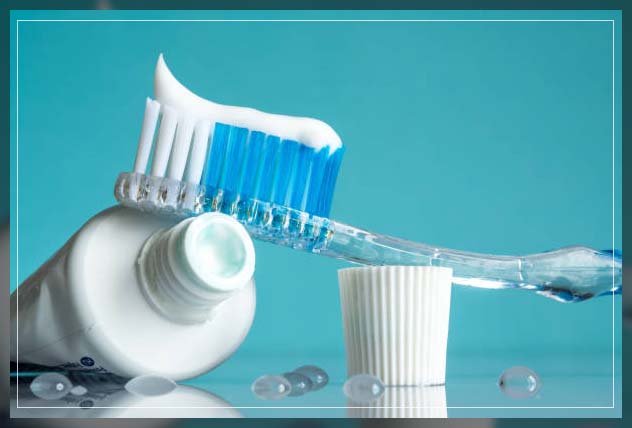
One of the toothbrushing essential is to use fluoride toothpaste.
While you may want to experiment with different kinds of toothpaste, this one, in particular, has many benefits.
Fluoride is a mineral that is abundant in the soil and rocks. However, it is also found in water.
Its presence in water supplies and oral care products is indicative of its oral health benefits.
It helps to protect your enamel from decaying and causing cavities.
Moreover, it strengthens your enamel in return by remineralizing it.
This article discusses the benefits of using fluoride toothpaste and how to use it properly. Keep reading below to know more!

Fluoride Toothpaste Benefits for Oral Health
Fluoride occurs naturally in water and is also added to oral care products such as toothpaste, mouthwash and rinses.
The acceptable amount of it in water is about 0.7 to 1.2 parts per million. According to American Dental Association, it is accessible to 75 percent US population.
One of the biggest reasons to add it in water and toothpaste is how it protects your teeth to prevent tooth decay.
When you eat or drink something sugary or acidic, it can erode your enamel.
The bacteria inside your mouth feed on sugars. As you eat something, the food debris can get stuck inside your teeth.
Moreover, the bacteria settle inside the nooks around your teeth as well as on the pits and grooves of your back teeth. This biofilm of bacteria on your teeth is dental plaque.
Hence, when you eat something, especially sugary, starch and acidic food, the bacteria start to feed on it.
As the bacteria metabolize the sugars, it forms acids.
The acids directly land on your tooth enamel because of the presence of plaque on teeth.
The enamel is very strong and it contains about 96 percent mineral content.
However, these acids can erode it over time.
Therefore, the acids destroy the tissue and protective layer of the tooth and this allows the bacteria to penetrate the tooth.
This leads to tooth decay and further forms holes inside i.e. a tooth cavity.

However, fluoride helps to protect your enamel from erosion.
It slows the ability of the plaque to produce acids. But more importantly, it strengthens the enamel.
This happens by resisting demineralization which happens when bacteria attack the tooth.
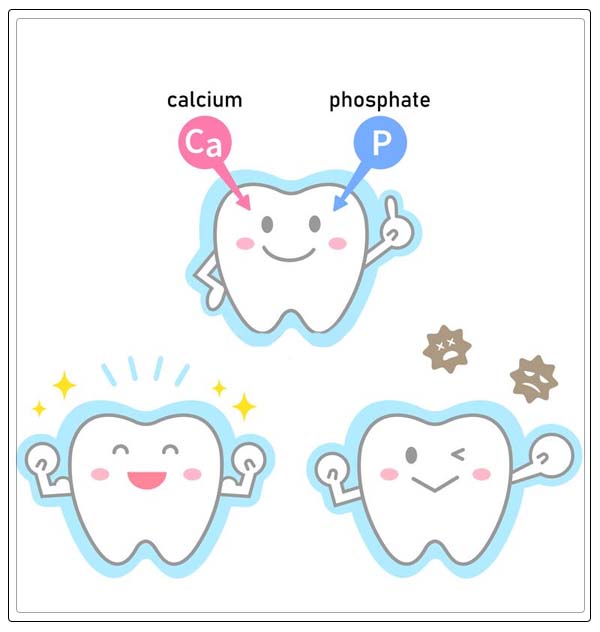
Instead, it brings the minerals and ions (calcium and phosphate) to the tooth. This helps to remineralize the enamel and make it stronger to resist the acid.
Hence, it reduces the mineral loss from the enamel. Furthermore, using it to brush your teeth twice a day can help reverse early tooth decay.
As the weak enamel strengthens, it decreases your chances of getting cavities.
Also, it can control the growth and accumulation of bacteria inside your mouth.
Besides, toothpaste, you can also find fluoride in other oral products.

Fluoride in Oral Care
Water
Fluoridated water contains safe levels of fluoride i.e. between 0.7 to 1.2 parts per million.
If your water lacks fluoride then you are more likely to get decay and cavities.
Your doctor may recommend you take fluoride tablets if your drinking water is not fluoridated.
Besides water, children drink fluoride fortified juices and certain food contain fluoride too.
Mouth Rinse
Your dentist prescribes you to use a mouth rinse or mouthwash containing fluoride to fight decay.
It is unsuitable for children under 8 years old but children above that and adults can add it to their oral hygiene routine besides brushing teeth and flossing.
However, wait a while after brushing to use mouthwash. This is because the mouthwash may wipe away the oral health benefits of fluoride present in the toothpaste.
Your mouthwash should contain about 1350 parts per million fluoride content.
Varnish
Besides giving fluoride tablets, your doctor may apply a fluoride varnish to you or your child’s teeth if they are at risk of decay.
It is safe to apply on baby teeth as well as permanent teeth.
Your dentist will paint a varnish onto your teeth every six months.
Therefore, both children over 3 years old and adults who are at risk of developing decay can get protection against decay with it.
It contains high levels of fluoride that strengthen the enamel. Therefore, it develops more resistance against attack from bacteria hence, reducing the chances of decay.
Therefore, if you or your child wants extra protection because your water lacks fluoride then ask your dentist to apply a varnish. Though, using toothpaste will provide enough protection too.
However, you may question whether the toothpaste is safe to use.
Let’s find out about that below!
Is Fluoride Toothpaste Good or Bad?
Fluoride Toothpaste contains mild levels of fluoride which is generally safe to use.
Children use toothpaste with 1000 parts per million of fluoride while adults use up to 1500 parts per million.
Hence, this mild quantity is negligible to cause any health concerns.
However, consuming more fluoride can lead to fluoride toxicity and fluorosis.
Toxicity happens when you ingest a bigger amount of fluoride. It can lead to vomiting, diarrhea, abdominal pain and nausea.
Dental fluorosis is a result of using more than enough fluoride.
Children can get fluorosis when they consume high amount of fluoride in water, toothpaste, fluoride-fortified juices.
Fluorosis affects the appearance of teeth in children and adults, however, it happens during your teeth forming age which is before the age of 8 years.
It can either be in the form of white spots and specks that only your dentist can recognize or it can be in moderate and severe fluorosis.
Moderate and severe fluorosis leaves behind pits in the enamel as well as yellow and brown spots.
Furthermore, it is even harder to get rid of these marks by teeth whitening as bleach can exacerbate them.
Hence, it is better to prevent them. Your child will not get fluorosis by using a large amount of toothpaste but it is still better to give them only about the size of a grain of rice or a pea-sized amount according to their age.
However, they are more likely to get it by swallowing the toothpaste instead.
Therefore, you should supervise them while they brush. More on that below!
Fluoride is generally safe and these areas with fluorosis are where the enamel is the strongest.
Hence, using toothpaste with fluoride content is actually good for your teeth unless you swallow it.
Using Fluoride Toothpaste on Children
Oral care begins for your children from the time they are born.
As they consume milk, you should wipe your child’s gums with a warm piece of a soft cloth.
Begin brushing their teeth when their baby tooth erupts.
While you may want to use fluoride-free toothpaste for children younger than 2 years, it is okay to use a toothpaste with fluoride too as long as they do not swallow it.
This requires you to angle their head downwards so that the toothpaste leaves their mouth as they lack swallowing and spitting reflexes at this point.
Furthermore, use toothpaste that is only the amount of a grain of rice for children under 3 years of age.
Even if they accidentally swallow it, the amount is negligible.
However, they may feel abdominal pain and you should take them to the doctor for a quick checkup.
As your child turns three, they are able to spit.
Hence, you can safely give them a larger amount of toothpaste. Increase it from the size of a grain of rice to a pea-size.
However, that does not mean that they will stop swallowing it. They may still continue to swallow their toothpaste if they like its taste.
Therefore, choose a flavor that they are less likely to swallow. However, do not go too harsh on them that the flavor dissuades them from brushing altogether.
So, the best way is to supervise them while they are brushing. Children up to six years old lack dexterity to hold a brush but those older than that can brush on their own.
Fluoride is important in enamel formation for children under seven. Hence, supervise them while they brush so that they brush correctly and reap the benefits of using fluoride.
Selecting The Right Toothpaste for Your Family
You can purchase fluoride toothpaste of popular brands such as Colgate and Sensodyne.
They produce specific toothpaste that contains fluoride and provides protection against cavities and decay.
While you make your purchase, also look for other essential elements in your toothpaste.
Firstly, children, toothpaste should not have more than 1000 parts per million amount of fluoride.
Whereas the ones for adults can range from 1350 to 1500p ppm.
Secondly, it is better to avoid sugar as a flavoring agent. This can put your teeth at a worse risk of decay.
Furthermore, look for active ingredients that help to reduce your oral health concerns.
These include sensitive teeth, gingivitis and reducing the chances of enamel erosion.
If your doctor recommends you a high fluoride toothpaste, it is probably to reverse the early stages of decay and deal with tooth sensitivity.
However, it is not as safe to use for children, hence, make sure that you should not share it with your family members.
Besides brushing, you need to continue flossing teeth and using mouth rinses to maintain good oral health.
Summing Up
Fluoride toothpaste is crucial for enamel development in children and enamel protection in people of all ages.
If you skip using it, you are more likely to develop cavities.
Healthier teeth let you smile brightly. Hence, start working on retaining your healthy teeth today by adding it to your daily routine.