Do you know that High Protein Foods are important for your overall health?
What you might be thinking of Protein is actually a large category of molecules.
Moreover, they give structure and support to your cells and are important for different functions.
These include immune function, movement, chemical relations, hormone synthesis, and more.
They are all made up of tiny building blocks: Amino acids.
Nice of these is essential, which means that your body needs them.
However, it is unable to make them on its own, thus, you need to get them through your diet.
Furthermore, the amount of protein your need to consume per day depends on certain factors.
These include your body size, activity levels, age, and pregnancy tests.
It is important to note that some people need more protein than others.
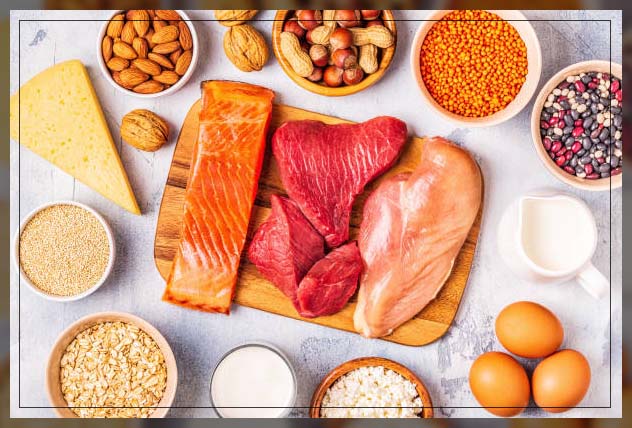
However, it is important that everyone get the optimal amount of protein by eating protein-rich foods.
Let’s learn more about them in detail.
Proteins
Not only are proteins important for your overall health, however, but they are also the most filling macronutrient.
Consuming it helps to keep you feeling full and satisfied which also supports healthy body weight, according to studies.
The current recommended dietary allowance, RDA for protein is set at 0.36 grams of protein per pound of your body weight.
Or 0.8 grams per kg.
However, keep in mind that this reflects the minimum amount of protein you need to meet the needs of your body.
Most active people, older adults, and those conceiving, or breastfeeding, need more about protein than that.
For instance, experts suggest that if you are physically active, then you need 0,54 to 0.9 grams of protein per pound of your body weight.
This is about 1.2 to 2 grams per kg, a day, according to studies.
Luckily hitting your protein requirement can be very easy if you include enough protein-rich foods in your diet.
But first, let’s discuss some benefits of proteins.
Benefits of Proteins
Some of the benefits of high protein foods are as follows:
1# Growth and Maintainance
One of the benefits of consuming high-protein foods is that your body needs them for the growth and maintenance of tissues.
In a normal situation, your body breaks down the same amount of protein that it uses to build and repair tissues.
While other times, it breaks down more proteins that it can create.
Thus increasing the needs of your body.
This often happens while you are ill, during pregnancy, and during breastfeeding.
2# Causes Biochemical Reactions
Enzymes in your body are proteins that help in thousands of biochemical relations that take place within and outside of your cells.
These may also function outside the cells, like digestive enzymes i.e. lactose and sucrase which help to digest sugar.
On the other hand, some enzymes need other molecules like vitamins or minerals for reactions to take place.
According to studies, bodily functions that depend on enzymes are:
- blood clotting
- muscle contraction
- energy production
- digestion
However, the lack or improper function of these can result in disease.
3# Acts as Messenger
An important thing to note is some proteins are hormones.
These are chemical messengers that help in communications between your cells, tissues, and organs.
They are made and secreted by endocrine glands or tissues and then your blood transports them to the target tissues or organs.
These hormones are divided into three categories:
- protein and peptides: made from chains of amino acids, ranging from a few to several hundred
- steroids: comes from fat cholesterol, the sex hormones, testosterone, and estrogen are also steroid-based
- amines: comes from amino acids tryptophan or tyrosine that helps to make hormones related to sleep and metabolism
4# Provides Structure
Some proteins are fibrous and provide your cells and tissues with stiffness and rigidity.
 These proteins including keratin and elastin help to form the connected framework of certain structures in your body.
5# Maintains Proper pH
Proteins play a crucial role in regulating the concentrations of acids and bases in your blood and other bodily fluids.
Moreover, a constant pH is important as even a slight change can be harmful or potentially deadly.
6# Boosts Immune Health
Proteins help immunoglobins or antibodies to fight infections, thus, boosting your immune system.
Additionally, antibodies are proteins that help to protect your body from foreign pathogens like bacteria and viruses.
7# Provides Energy
It is important to note that proteins supply energy to your body.
However, they are beneficial in conditions like fasting, exhaustive exercises, or inadequate calorie intake.
Now, let’s discuss high-protein foods you can easily add to your diet.
Eggs
One of the most nutritious high protein foods available is whole eggs.
They are a good source of proteins that is easy to absorb and are also excellent sources of different vitamins and minerals, healthy fats, and antioxidants.
For instance, whole eggs contain selenium and vitamin B 12 and A.
 Moreover, they are also rich in choline, a nutrient that is very important during pregnancy and breastfeeding.
This is because it plays a crucial role in growth and development according to studies.
However, keep in mind that egg white is almost pure protein.
But whole eggs that include egg yolk provide more nutrients including vitamins, minerlas, antioxidants, and healthy fats.
If you are more concerned about the cholesterol in egg yolks, it is important to note that research suggests that they are not bad for you. But avoid fat food prepared from eggs.
While many studies indicate that whole eggs are healthy for most people and can actually help to prevent chronic diseases.
One large egg or 50 grams of it provides 6.3 grams of protein.
Almonds
Almonds are nutritious tree nuts that are rich in fiber, vitamin E, manganese, and magnesium.
Moreover, they are also a high plant-based protein source.
Eating almonds may benefit your health in different ways.
This includes lowering heart disease risk factors like high LDL or bad cholesterol and high blood pressure.
You can add them to your plant-based meals, like grain bowls, salads, for a boost of filling protein and fiber.
However, if you are looking to add more nuts to your diet, you can add pistachios and cashews.
One ounce or 28.35 grams of almonds provides 6 grams of protein.
While 5.73 grams of proteins in pistachios per 1 ounce or 28.25 grams.
And Cashews contains 4.34 grams of protein per 1 ounce or 28.35 grams.
Learn more about Best Beauty Therapist in Dubai here.
Pumpkin Seeds, Peanuts, and Peanut Butter
Let’s discuss the protein content in the following:
Pumpkin Seeds
Pumpkin seeds are highly nutritious and delicious.
For instance, they are a great source of minerals like iron, phosphorus, magnesium, and zinc.
Moreover, they are loaded with plant-based protein and fiber.
You can add them to salads, baked goods, oatmeal, or yogurt, or mix them with unsweetened dried fruit and almonds.
A 1/4 cup or 29.5 grams of pumpkin seeds contains 8.8. grams of proteins.
While some other seeds that contain proteins are:
- sunflower seeds: 7.25 grams per 1/4 cup of 35-gram serving
- flax seeds: 7.5 grams of protein per 1/4 cup or 42-gram serving
Peanuts
You might think of peanuts as nuts, however, they are legumes.
Peanut and peanut butter are filled with nutrients like protein, folate, magnesium, and vitamin E.
Eating both of these can help you to feel full due to their high protein content.
In fact, studies indicate that adding peanut butter to your high-carb meal can help to reduce sugar spikes after the meal.
1 ounce or 2.35 grams of peanuts provides 7.31 grams of protein
While a 2-tablespoon or 32 gram serving of smooth peanut butter provides 7.2 grams of protein.
Chicken Breast, Lean Beef, and Fish
These three are high-protein foods that are beneficial for your overall health.
You can add them easily to your diet to gain health benefits.
Chicken Breast
It is an excellent choice if you are trying to increase your protein intake.
Additionally, it contains B vitamins and minerlas like zinc and magnesium.
Moreover, it is very versatile and easy to cook. You can add it in the sliced form to salads, stir-fry, and make a soup to make these dishes more filling.
One-half of chicken breast or 86 grams provides 26.7 grams of protein.
Lean Beef
It is a rich source of protein and is also high in bioavailable iron, zinc, selenium, and vitamin B6 and B12.
Red meat can also be a part of your diet, however, it is best to take it in a moderate amount.
Consuming high amounts of red meat increases the risk of developing certain health conditions like colorectal cancer.
Thus, try cutting back on red meat, and consume more plant-based protein, fish, and poultry.
3 ounces or 85 grams of lean beef provides 24.6 grams of protein.
Fish
Fish is an excellent source of proteins and provides a number of vitamins and minerals like iodine, selenium, and vitamin B12.
When you include a lot of fish in your diet, it can help to lower the risk of conditions like heart disease and type 2 diabetes.
Fatty fish like salmon and herring are high in omega 3 fats can have overall health benefits.
Half a salmon fillet or 124 grams provides 30.5 grams of protein.
While a cod fillet or 180 grams provides 41 grams of protein.
Learn more about Best Laser Clinic in Dubai here.
Quinoa
You might be one of those people who think quinoa is a grain, however, it is a seed.
This is why it is categorized as pseudocereal.
Moreover, it is very powerful in the wellness world.
Quinoa is rich in fiber, folate, copper, iron, and zinc, as well as high in proteins than many other grains.
It is also referred to as a complete protein as it contains all nine of the essential amino acids that your body cannot make on its own.
However, it actually contains insufficient amounts of certain amino acids.
For this very reason, experts argue that quinoa should be considered a “nearly complete” protein.
You might also find it interesting if you are following a vegetarian or vegan diet and looking to make sure you are getting all essential amino acids.
One cup or 185 grams of cooked quinoa provides 8 grams of protein.
Protein Powders
In case you are unable to prepare a meal, protein powder can come in handy.
You can easily add protein powders like whey and pea protein to shakes, smoothies, energy balls, yogurt, and more to increase the protein and fullness factor.
There is a protein powder of nearly every taste preference and dietary restriction.
Pea protein and whey protein are both great choices for those looking for a convenient way to increase protein intake.
Whey powder provides 16.6 grams of protein per 28.6 grams.
While pea protein provides 15 grams of protein per scoop or 20 grams.
Learn more about Clinic Local Management in Dubai here.
Ezekiel Bread and Lentils
Ezekiel bread is different from most types of bread.
It is made of organic and sprouted grains and legumes including:
- millet
- barley
- spelt
- wheat
- soybeans
- lentils
In comparison to other bread, like wheat bread, Ezekiel bread is high in protein, fiber, and other important nutrients.
Try making a protein sandwich by topping Ezekiel bread with turkey, lettuce, tomato, and a little bit of hummus.
One slice or 60 grams of Ezekiel bread provides 6 grams of protein.
On the other hand, lentils are the richest source of plant-based proteins you can eat.
Thus making them an excellent choice if you are following a vegetarian or vegan diet.
Moreover, they contain nutrients like fiber, folate, magnesium, potassium, iron, copper, and manganese.
Studies indicate that if you regularly consume lentils and other legumes, it can help to lower the risk of developing conditions like heart diseases, and fatty liver disease.
100 grams or about 1/2 cup of cooked lentils provides 9.02 grams of protein.
Other high protein legumes are:
- Chickpeas that provide 7.05 grams of protein per 100 grams cooked
- black beans that provide 8.86 grams of protein per 100 grams cooked.
Milk
Dairy milk contains a little of nearly all the nutrients that your body needs.
Moreover, it is a good source of high-quality protein and is high in vitamins and minerals like calcium, phosphorus, and riboflavin i.e. vitamin B2.
If you have lactose intolerance, however, you cannot tolerate milk and other dairy products and should avoid dairy-containing foods.
Fortunately, there is a variety of lactose-free products like lactose-free milk, cheeses, and yogurts.
Nondairy milk alternatives, like cashew milk and coconut milk, can also be a good substitute for milk.
However, they are often much lower in protein and do not contain the same nutrients.
One cup or 246 mL of dairy milk provides 8.32 grams of protein.
Learn more about Cold Laser in Jumeirah here.
Cottage Cheese and Greek Yogurt
Both cottage cheese and greek yogurt are high-protein foods.
Cottage Cheese
It is a type of cheese that is low in fat and calories, yet high in protein.
Moreover, it is rich in calcium, phosphorus, selenium, vitamin B12, riboflavin, Vitamin B2, and other nutrients.
Research suggests that cottage cheese is just as filling as eggs, thus, making them an excellent choice for a satisfying meal or snack.
You can pair it with cut-up fruit for a high-protein breakfast on the go.
1 cup or 266 grams of cottage cheese provides 28 grams of proteins.
Other high-protein cheeses are cheddar cheese and mozzarella.
On the other hand, greek yogurt or strained yogurt is a very thick type of yogurt high in protein.
It has a creamy texture and is a good source of nutrients like calcium, vitamin B12, A, selenium, and zinc.
The slightly tart flavor pairs well with both sweet and savory dishes, thus making it a versatile kitchen ingredient.
7 ounce or 200-gram container provides 19.9 grams.
Other yogurt products are:
- unsweetened low-fat yogurt that provides 11.9 grams of protein per 8 ounces or 227-gram container
- kefir which provides 9..21 grams of protein per 1 cup or 243 mL
Turkey Breast and Shellfish
Turkey breast is similar to chicken breast in a number of ways.
It consists of protein, with little fat and a low number of calories.
Moreover, it is high in vitamins and minerlas like selenium, zinc, and vitamin B12 and B6.
You can add it to your salads, and sandwiches or add it to your soups and grain dishes
3 ounce or 85 gram serving of turkey provides 25.6 grams of protein.
While shellfish including shrimp, oysters, clams, and scallops are an excellent source of protein.
Furthermore, shellfish contains healthy fats, and a number of vitamins and minerlas like selenium, zin, vitamin B12, and B6.
All types of shellfish are high in protein and you can enjoy it in salads, pasta, and stir-fries.
3 ounces or 85 grams of cooked clams provides 21.8 grams of proteins.
The same serving of shrimps provides 20.4 grams of protein.
Learn more about The Best Laser in Jumeirah here.
Final Thoughts
Getting enough protein daily is important for your overall health.
However, your needs may vary. Experts recommend that most active people should consume 0.54 to 0.9 grams of protein per pound of their body weight or 1.2 to 2 grams per kg.
There are a number of high-protein foods you can choose from, and try adding a few from the above list to meet your daily needs.


 These proteins including keratin and elastin help to form the connected framework of certain structures in your body.
 Moreover, they are also rich in choline, a nutrient that is very important during pregnancy and breastfeeding.
 This includes lowering heart disease
  Red meat can also be a part of your diet, however, it is best to take it in a moderate amount.
 However, it actually contains insufficient amounts of certain amino acids.
 Research suggests that cottage cheese is just as filling as eggs, thus, making them an excellent choice for a satisfying meal or snack.