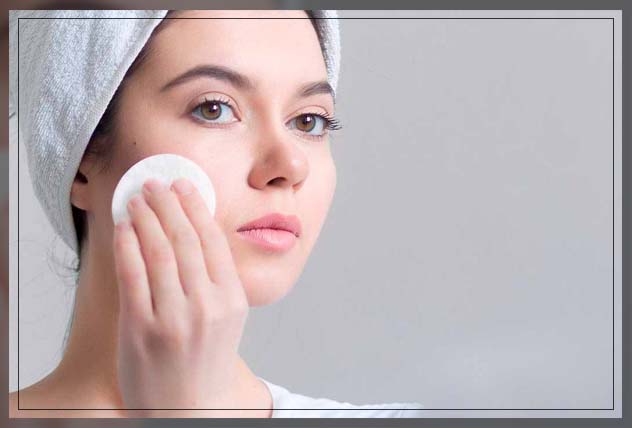
Oily skin does not get flaky in the coming winters. However, it still affects the way you look.
People with oily skin get more pimples, breakouts, acne and clogged pores.
Hence, if you do not take the right care of your skin type, your face will soon have many unwanted breakouts and skin conditions.
This involves using home remedies and skincare to make sure that you are not harming your skin further.
This article discusses how you can take care of your skin if it is oily and what you can do to prevent future breakouts. Keep reading to know more!

Identifying an Oily Skin
In order to identify your skin type, you will need a blotting paper.
All you need to do is to let the blotting paper it on different parts of your face or wipe those parts with it.
If there is oil on all parts then it indicates that your skin in oily.
If it is totally dry then you have dry skin and if the T zone i.e. the forehead, nose and chin are oily but the cheeks are dry then you have combination skin.
Other than that, you can tell if your skin is oily is generally greasy. There will be shine on your face because of the oil and that will give your skin a rough look.
Your pores will be visible enough because they are large.
Moreover, these pores will be clogged leading to blackheads.
Your skin will appear thick and will have pimples and breakouts now and then.
Your genetics and hormonal changes affect how oily your face is.
Moreover when you take a lot of stress then it can increase the oily sebum in your skin.
Also, everyone has different levels of oiliness in their skin.
People with this skin type have a hard time finding suitable makeup as that mixes up with the sebum in your skin harming its consistency.
Thus, you want to control the oiliness so that you get less frequent breakouts and can apply your skin smoothly.
Controlling the sebum can also help to prevent skin conditions like acne scars.
Maintaing a good skincare routine is crucial for keeping your skin normal so that excess oil does not accumulate clogging pores and causing breakouts.
Let’s find out what products you need in order to keep your face looking healthy and glowing without any breakouts.

Skincare Tips for Oily Skin
An oily skincare routine will look like this:
- Cleanser
- Toner
- Treatment
- Moisturizing
- Using blotting paper
- Face Mask
Cleansing Twice Daily
Cleansing and washing your face on a regular basis is essential to reducing and controlling oil present on your skin.
While there are some ingredients that help to contain the oil and exfoliate the skin, you can also make do with your regular soap.
However, it should be gentle on your skin and use warm water to clean.
Ensure that the soap you use does not dry out your skin, has additional moisturizers or fragrances and harsh chemicals.
If your skin dries out thanks to the soap then it will respond by making more sebum increasing the oiliness.
Also, do not use loofahs or rough clothes onto your skin to rub the soap as this friction can also increase the production of oil.
You should wash your face twice a day, in the morning and night.
It is especially important to not skip the morning and thoroughly cleanse your face first thing as you wake up.
This is because over the night your skin sheds cells and produces oil. Therefore, your face will be oily in the morning and you need to cleanse off the dead skin cells.
A good choice will be an exfoliating cleanser containing ingredients such as salicylic acid or glycolic acid.
However, they may be irritating for a few people hence, you could simply glycerin soap and water.
Using a Toner
After cleansing, you need to apply a toner. While people believe astringents can dry out skin, a natural astringent like witch hazel can actually assist in improving the skin.
It is anti-inflammatory and contains tannins therefore it soothes the skin.
Though you can also use toners that exfoliate your skin. Or use them as treatments.
Treatments, Moisturizing and Face Mask Remedies
Treatments can relax the skin conditions that come with oily skin.
For instance, if acne is your concern then using benzoyl peroxide as well as sulfur can help.
It can reduce oil production and as a result decrease breakouts.
Also, using retinol in your nighttime routine helps to keep your pores cleaner giving you a clear and glowing skin.
Other ingredients to look out for are glycolic acid, beta-hydroxy acid, salicylic acid and lactic acid for exfoliation.
You can also use these products as your cleansers, exfoliators and toners besides treatments.
Next up is Moisturizing!
You may think that since you have an oily skin, you do not require moisturizing. That is wrong!
Using the right moisturizer can will not make your face greasier rather it will benefit your skin.
Every skin type and tone needs moisturizing.
Choose wisely and go for a likely lightweight, water-based, oil-free moisturizer.
Aloe vera is a good example of a moisturizer that also soothes skin, treats acne and is good for oily skin.
However, any lightweight moisturizer will do. Avoid thick creams and lotions that are better suited to people with dry skin.
Besides that masking once a week can reduce the oil content on your skin.
You do not have to buy face masks from a commercial store rather you can make your own from the ingredients in your kitchen.
A honey mask can treat your acne and decrease the oil in only 10 minutes. It has antiseptic and antibacterial properties to prevent the formation of acne. Moreover, it is soft hence, smoothes your skin.
Clay masks that have bentonite and smectite are known to absorb oils. Therefore, they decrease the oil and sebum giving you less shine on your face.
Furthermore, oatmeal masks can also soothe skin because of their antioxidant and anti-inflammatory properties.
Practices for an Oily Skin Person
Patting The Skin
After using cleanser and toner, pat your skin dry. You can use your hands or a soft towel.
This helps in absorbing the products and avoiding shine. However, remember to not pull your skin as it can in fact increase sebum if the skin senses roughness.
Washing Your Face After Exercise
It is essential to cleanse your face twice a day however, it is also important to give it a wash after exercise.
If you can take a shower right after exercise then that is best to get rid of the sweat.
However, if you cannot, washing your face alone can also eliminate the dirt, oil and sweat that has accumulated on your face and body. That can lead to breakouts.
Thus when you next exercise you would want to at least clear off the sweat and oil on your face first.
Use Blotting Paper Throughout the Day
Blotting paper cannot reduce the amount of sebum on your face. However, it can certainly reduce the appearance of greasiness.
They help to pull out the oil settling on your skin.
Cloth pads also cleanse the pores as they contain ingredients such as salicylic acid and glycolic acid.
However, the most important point is…
Choosing Products Carefully
If you have oily skin you need to be selective about what you apply to your face.
Any ingredient that increases dryness will stimulate the production of sebum.
Alcohol can cause dryness and increase sebum secretion.
Do not use thick and greasy products as they will make your face appear glossier.
Refrain from using shea butter, cocoa butter and other thick creams and lotions.
Rather only go for water-based gels and cleansers.
Preventing Breakouts
You can not prevent the oiliness in your skin.
Your skin type usually depends on your genetics. The oil content on your face can also increase thanks to hormones and stress.
Therefore, your only option is to find a good skincare routine to stick to.
Usually, people with oily skin have a hard time dealing with their frequent breakouts.
If you are one of those, you may want to hide it with makeup.
However, oil-based products can actually make your skin worse.
They can clog pores that result in blackheads acne and other breakouts.
Hence, whenever you wear makeup it is better to go for water-based products or some may prefer to go bare face instead.
Another way to prevent breakouts is to control your diet.
Eating well plays a big part in keeping your skin healthy. Therefore, you should eat more healthy fruits and vegetables.
On the other hand refrain from trans fats and greasy foods. Processed foods, junk and fast food can also increase the oil content in your face.
Keep drinking more water to keep your skin hydrated. Plus eat a diet of whole foods.
Finally,
Oily skin may look more greasy than you want. Moreover, your skin will get acne and frequent breakouts.
Hence, you can manage it by using skin care and eating a good diet.