You might have heard about Thigh Lift as a solution to get rid of that excess and sagging skin.
If you have recently lost weight in your thighs, then you may be looking for a way to achieve smoother, more shapely legs.
Or perhaps, you might be looking for a way to address the skin of your thighs that tends to sag as you age.
However, it is important to note that a thigh lift is a major surgery that can pose a number of potential risks just like an arm lift. buttock lift or body lift.
This is especially of concern if you have any underlying medical conditions.
Moreover, if you are not at your goal weight, then this surgery is not right for you,
Considering the invasive nature of this procedure, it is good to research the procedure before undergoing it.
In this article, you will learn about the procedure, types, potential risks, and more.
Keep on reading.
Thigh Lift
Thigh lift or Thoghplasty is an invasive cosmetic surgery that aims to remove excess skin and fat from your thighs.
One of the most common reasons why you would want this procedure is that it helps to reshape and smooth the thigh area after losing weight.
You might also opt for this to gain more shapeliness and feel more comfortable wearing swimsuits, shorts, or jeans.
Thus, if you are considering this procedure after weight loss, your doctor may recommend maintaining a steady weight for at least 6 months according to the American Society of Plastic Surgeons.
Moreover, if you have already achieved your goal weight, then you will have to maintain it.
This is because weight fluctuations can interfere with the results post-thigh lift surgery.
Different Types of Thigh Lifts
Thigh lift helps to remove excess skin and fat.
However, there are different types of that it is done via different incisions.
Your doctor or plastic surgeon can help you choose the best surgery to meet your individual needs.
The following are the types of thigh lifts to consider.
Inner or Medial Thigh Lift
This is the most common form of cosmetic surgery and addresses the sagging skin in the groin inner thighs.
This is done vis an incision from your groin down towards the knee or toward the back of your thigh area.
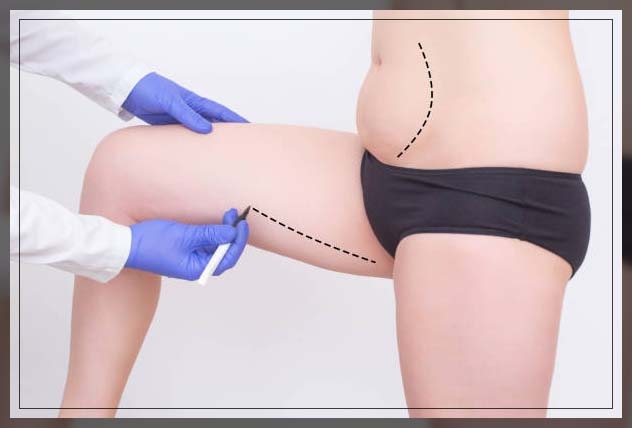
 Outer or Bilateral Thigh Lift
This one addresses the outside portions of your thighs and the procedure involves an incision that starts in your groin area.
This incision extends outward to your hip and lower back area.
Mini Thigh Lift
Depending on your individual needs, your surgeon may determine that you qualify for a mini thigh lift.
This one requires fewer incisions than other types, one in the groin area only.
Moreover, it works well if you want to focus on the upper-inner part of your thigh only.
Learn more about Fillers in Dubai here.
Other Types of Thigh Lifts
Other types of Thigh Lifts are as follows:
Vertical Thigh Lift
In case you want to get rid of excess skin in all areas of your thighs, then you might want to consider a vertical thigh lift.
This one requires large incisions that extend down to your knees.
However, due to the higher risk of complications, your surgeon may not recommend this.
Lift with Liposuction
In some cases, the thigh area may have poor skin elasticity.
In such a case, your surgeon may recommend liposuction in addition to thigh lift surgery.
This helps to remove the excess fat cells and prevent sagging skin.
Learn more about Liposuction in Dubai here.
Candidates for this Procedure
Generally, the candidates for the thigh lift procedure are as follows:
If your weight is relatively stable, have excess soft tissue along with the inner or medial thigh region or have the outer or lateral thigh.
 You are a healthy individual that does not have medical conditions that impair healing or increase the risk of surgery.
A non-Smoker who has a positive outlook and realistic goals for thigh lift surgery can accomplish and is committed to a healthy lifestyle.
This includes proper nutrition and fitness.
Consultation for Thigh Lift Surgery
During the consultation for this surgery, make sure to discuss your goals, medical conditions, drug allergies, and medical treatments.
Moreover, inform your doctor about the current medications, vitamins, herbal supplements, tobacco, and drug uses as well as previous surgeries.
Your plastic surgeon will also evaluate your overall health, examine and measure your body.
Take photographs for your medical records, discuss your options, discuss the outcomes of thigh lift surgery and potential risks.
Most importantly, the success and safety of your surgery depend on your complete candidness during the consultation.
Be sure to ask your surgeon any questions you might have in your mind.
Preparing for the Surgery
Before the surgery, your doctor will ask you to:
- get lab testing or a medical evaluation
- take certain medications or adjust your current medications
- stop smoking
- avoid taking aspirin, anti-inflammatory drugs, and herbal supplements, or any other medications that can increase bleeding.
Your doctor or surgeon will perform this surgery in their accredited office-based surgical facility, licensed ambulatory surgical center, or a hospital.
However, if they perform it on an outpatient basis, then make sure to have someone drive you home from surgery.
They would also need to stay with you for at least the first night following the surgery.
Procedure of Thigh Lift Surgery
The thigh lift procedure involves the following steps:
Step 1: Anesthesia
To make you comfortable during the procedure, your doctor will administer medications.
The options are intravenous sedation or general anesthesia.
They can recommend the best option for you.
Step 2: The Incision
The pattern of incisions varies based on the area or area of treatment, degree of correction, and you and your surgeon’s preference.
Let’s discuss them as follows:
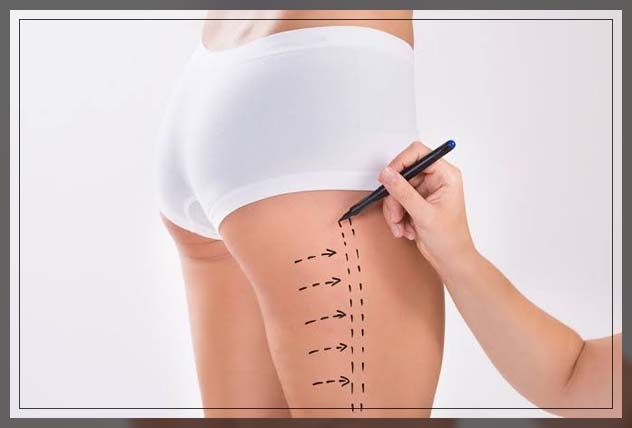
Inner Thigh Lift Incision: One technique for a thigh lift places incisions in the groin, extending downward and wrapping around the back of your thigh.
Another technique removes the excess skin from the groin downwards to the knee.
This involves using an incision along the inseam.
However, you may qualify for a minimal incision that involves an incision in the groin area only.
But your plastic surgeon will determine the appropriate one for you.
Outer Thigh Lift Incision: Improving the contours may require an incision extending from the groin around the hip and across the back.
Advanced techniques allow incisions to be placed in strategic locations, where they can stay hidden.
You can hide them with the help of different types of clothing and swimsuits, however, they may be extensive.
Step 3: Closing the Incisions
Deep sutures within underlying tissues help to form and support the new contours.
Sutures, skin adhesive types, or clips can help to close the skin incisions.
Step 4: Results
The smooth, tight contouring is visible almost immediately, although there might be some swelling and bruising.
Recovering from the Surgery
After you go home from the procedure, your surgeon will place dressing against the incisions to help ease the swelling.
They may also insert a tube to help drain excess blood and fluids. You will need a follow-up appointment to have your surgeon remove these.
Just like other cosmetic procedures, this is one of the major procedures and you will need to take time off work to recover.
 Moreover, you might also experience pain, bruising, and swelling for a few days.
However, you will start noticing contours right away, but not the full results for several months.
In cases there is worsening pain or the onset of bleeding through the sutures or dressings, you should address your doctor right away.
Moreover, visit them if your experience wound separation, fever, chills, and numbness.
Learn more about Hollywood Smile in Al Wasl here.
How long Before you see the Results?
Generally, you will need a number of weeks to recover from this surgery, so you should plan your work schedule accordingly.
Moreover, you will have to refrain from heavy lifting, and strenuous exercises for at least 6 weeks after the procedure.
You will need to elevate your leg as much as possible during this time and may be able to go out after a few days.
However, it is normals for your ankles to swell as you gradually move around.
After your scars heal, your surgeon may make incisions to remove excess skin around your thighs.
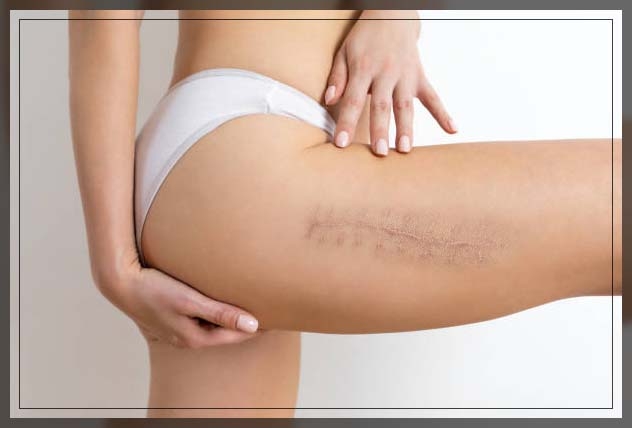
After completion, the scars are usually not much noticeable, especially if your docotr places them in inconspicuous areas.
Potential Risks of Thigh Lift Surgery
Before undergoing this surgery, you will need to determine whether the results you are looking for are worth the risk of side effects.
While there are no serious complications, you should discuss the following with your surgeon:
Bleeding, scarring, infections, skin discolorations, asymmetry, and loss of skin elasticity.
Moreover, discuss the possibility of fluid accumulation, deep vein thrombosis, and heart or lung complications.
It is important to note that your risk of complications may increase if you smoke, get limited physical activity, or consume processed foods.
Finding a Qualified Surgeon
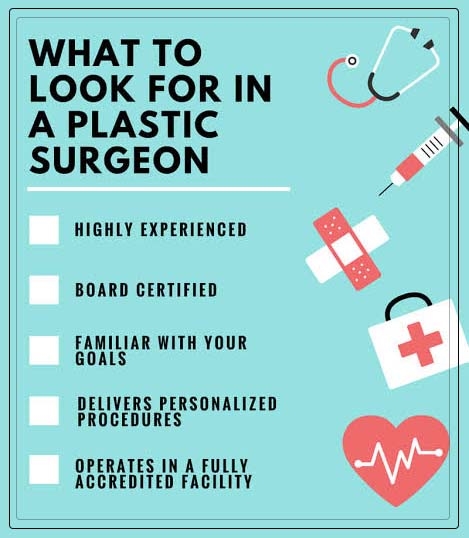
It is important to shop around for a reputable and experienced cosmetic surgeon that is board-certified.
Moreover, look for someone that specializes in skin removal procedures like thigh lifts.
A good and prospective provider will go over the procedure with you in detail.
They will also show you a portfolio of their work that includes before and after photos.
 During the initial consultation, make sure to ask about the surgeon’s specific experience as well as risks based on your health profile.
Thus, finding a surgeon with experience in performing a wide variety of thigh lifts is important to get the best results with minimal side effects.
Cost of the Procedure
This is an aesthetic procedure that your insurance will not cover.
However, many surgeons offer payment plans and financing options.
Thus, it is important to ask your provider for ways you can offset some of the costs.
You may also need to pay additionally for related procedures like anesthesia, the facility, medications, and more.
Moreover, the overall cost varies and depends on your location, the type of thigh lift, and your surgeon’s overall experience.
It is important to not settle for an inexperienced surgeon.
This could increase the risk of side effects and unsatisfactory work which would cost even more in the long term.
Takeaway
A Thigh lift is a non-invasive cosmetic surgery that helps to remove excess fat and skin after massive weight loss and tighten the skin. To retain the results, you must be at a steady weight for a number of months before undergoing this procedure.
It is important to choose a provider with extensive experience and training to avoid complications and extra costs. You can expect to recover in several weeks.
When you recover, you will find this procedure worth your time and investment.


 Outer or Bilateral Thigh Lift
 You are a healthy individual that does not have medical conditions that impair healing or increase the risk of surgery.
 However, if they perform it on an outpatient basis, then make sure to have someone drive you home from surgery.
 This involves using an incision along the inseam.
 Moreover, you might also experience pain, bruising, and swelling for a few days.
 Moreover, discuss the possibility of fluid accumulation, deep vein thrombosis, and heart or lung complications.
 During the initial consultation, make sure to ask about the surgeon’s specific experience as well as risks based on your health profile.