

Teeth Whitening Dubai: Complete Guide
Are you worried when you see your yellow teeth? Sparkling white teeth are the secret to a happy and healthy smile. So if you want pearl white teeth, the best option is teeth whitening Dubai. Book an appointment today, and visit your dentist for a safe, fast, and effective procedure.
We all know that our teeth’ color is a good indication of good oral health. When it comes to teeth, one may have different shades and tints. Therefore, you need to understand that the color of the teeth depends on multiple other factors. Certain habits and regularly eating food tend to stain your teeth.
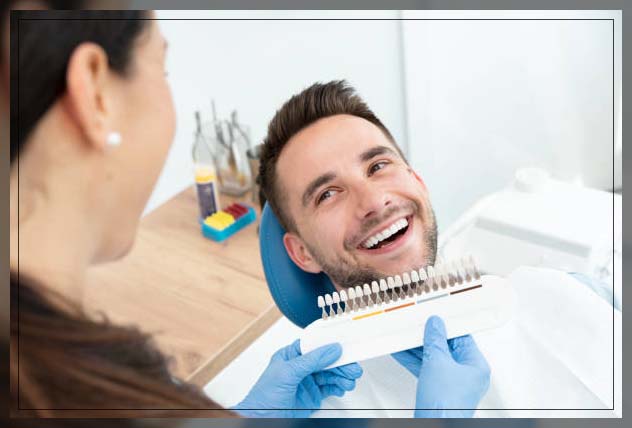 If you are in the habit of smoking or consuming dark pigmented foods and drinks – there are chances you may stain your teeth. In such a scenario, your teeth could take on a depressing gray or yellow hue solely depending on your dental check-up frequency. In addition, oral hygiene routine and genetics may also have an effect.
If you want your youthful, healthy white smile back – teeth whitening treatment may be the best option. Are you planning to go for the teeth whitening treatment? Get your facts first. Here are a few of the common questions about dental whitening.
What is Teeth Whitening?
Teeth whitening or dental whitening – is an effective way of lightening the natural color of your teeth without removing any of the tooth surfaces. This simple technique cannot make a complete color change. But it can lighten the existing shade of your teeth.
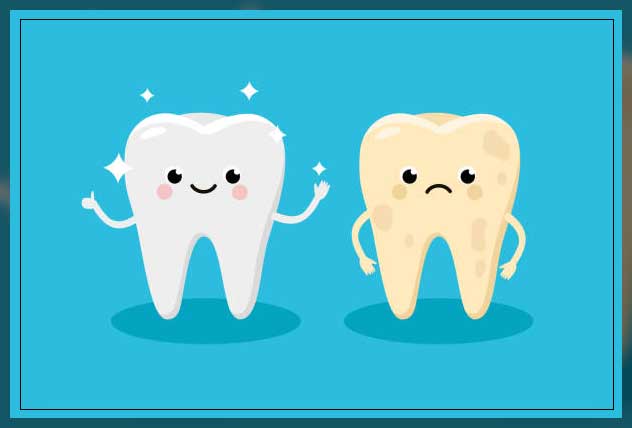 It is a simple procedure as your dentist will use a chemical to whiten your teeth. Most of the teeth whitening products commonly these days – use either of the two tooth bleaches. They are namely carbamide peroxide or hydrogen peroxide.
These bleaches act on your teeth’ surface, breaking the stains into smaller pieces. Thus making your teeth color less concentrated. As a result, your teeth look brighter.
Recently, dental whitening has become one of the most frequently requested dental procedures. Individuals often demand whiter and more perfect smiles. Therefore, you may have many choices for tooth whitening available these days. You may choose home-based products such as toothpaste, gels, and films.
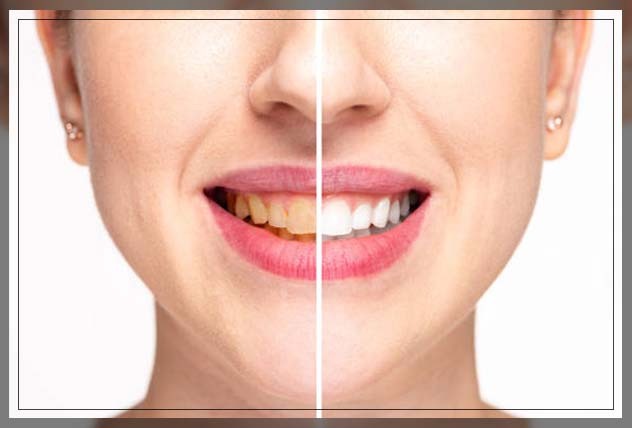 It is important to note that teeth whitening will make you feel confident and look younger while you smile. You can find several over-the-counter kits available in most drugstores which are cheap. These kits offer the convenience of at-home bleaching without visiting your dentist. But it is important to note that these kits are slower and less effective than professional whitening.
Teeth Whitening At Home
In addition, you may not get the guidance you might need at home as there is no dentist supervision. If you want pearly white teeth, invest in a professional teeth whitening procedure by your dentist.
You will have several reasons to opt for dental whitening treatment. Very few individuals have brilliant, sparkling white teeth. It is important to note that your teeth can become discolored as you age.
Food items like red wine, coffee, blackcurrant, and tea can stain the surface of your teeth. Not that smoking also contributes to the staining of teeth.
 Calculus teeth or tartar may also affect the color of your teeth. Few people have staining under the tooth surface. These stains are caused due to tiny cracks or certain antibiotics – that take up stains.
Why Are Your Teeth Whitening Options?
There are four ways to whiten your teeth. But you should consult your dentist before selecting these options:
1 Stain Removal Toothpaste
Toothpaste can only remove stains to some extent. One can achieve this by the mild abrasives present in the toothpaste.
Try using a particular kind of toothpaste – one that has earned the ADA (American Dental Association) Seal of Acceptance for stain removal. And hence it has been recommended for whitening purposes.
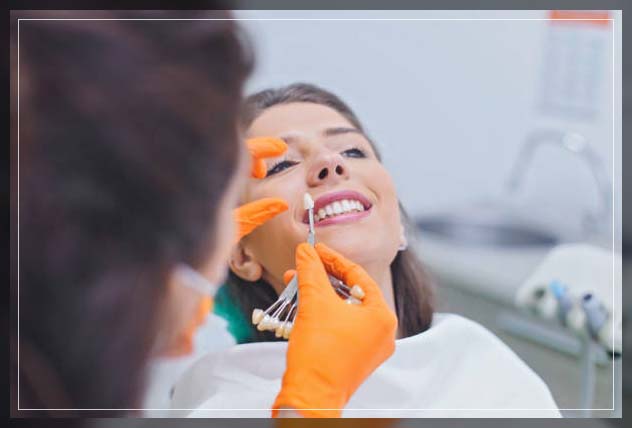 You can easily see this seal on the toothpaste package. These kinds of toothpaste usually have additional polishing agents. Most of these agents effectively remove stains and are safe for your teeth.
ADA-Accepted products generally do not change the color of your teeth, but bleaches do. These products can effectively remove stains from your teeth’s surface.
2 In-Office Bleaching
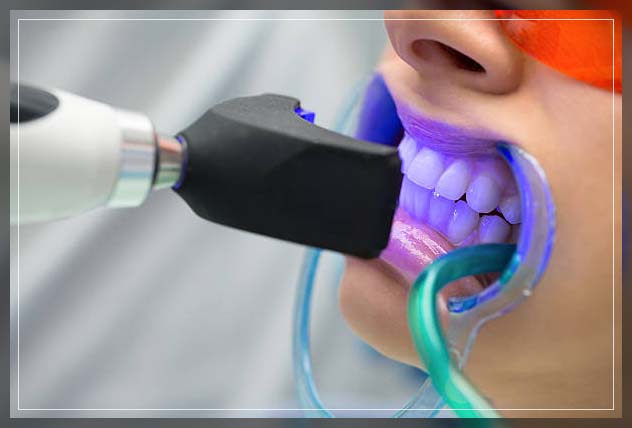
In-office or chairside bleaching – a procedure as it is called, typically requires only a single visit. As part of the treatment, your dentist will apply a protective gel or a rubber shield to your gums. The procedure will help protect your gums before using the bleach.
 Your dentist will generally use whiteners at the clinic that may have as much as 35 percent to 45 percent peroxide. On the other hand, over-the-counter teeth whitening kits like whitening trays or strips have just 7 percent peroxide and may take longer to remove stains.
3 At-Home Bleaching from Your Dentist
Especially during the pandemic, you might find an at-home dentist who may have provided a custom-made tray for at-home whitening. Your dentist will also give instructions on placing the bleaching solution in the tray. The amount of bleach to be used will also be mentioned.
At-home bleaching might be a preferred option. Especially if you feel comfortable whitening your teeth in the comfort of your home at your own pace – under the guidance of your dentist.
4 Over-the-Counter Bleaching Products
You can avail of various options online or in your local grocery store – like strips or toothpaste that can whiten your teeth by bleaching. The bleaching agent in the strip and toothpaste has a lesser concentration than what your dentist would use in the office.
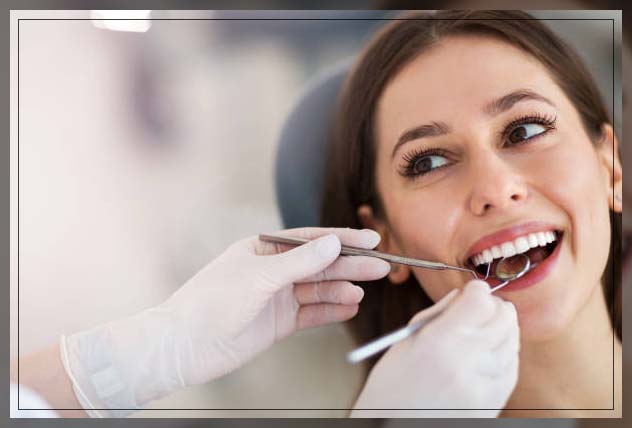
It is important to note that if you are planning to use an over-the-counter bleaching kit, you can discuss it with your dentist. Then look for a bleaching kit with the ADA Seal of acceptance. The kit with the ADA seal means it has been tested and confirms that it is safe and could effectively whiten your teeth.
Whitening vs. Bleaching: What is the Difference?
According to the FDA, the term bleaching is used when your teeth are whitened beyond their natural color. This rule applies strictly to products that contain hydrogen peroxide, contain bleach, or even carbamide peroxide.
In contrast the term “whitening” refers to restoring your tooth’s surface color by removing plaque, dirt, and debris. The procedure is also called teeth cleaning. So any product your dentist uses to clean your teeth like toothpaste is considered a whitener. It is true that the term whitening sounds better than bleaching. Therefore, it is more frequently used when describing products that contain bleach.
Your dentist will prefer bleach for in-office whitening – as it is more powerful and fast-acting than hydrogen peroxide. Hydrogen peroxide concentrations may range from 9 percent to 40 percent when used on your teeth.
On the other hand, the whitener used at home is slower-acting carbamide peroxide – which further breaks down into hydrogen peroxide. Carbamide peroxide typically has only about a third of the strength of hydrogen peroxide.
Side Effects – Teeth Whitening Dubai
It has been observed that only few individuals who use teeth whiteners experience tooth sensitivity. The sensitivity occurs when the peroxide present in the whitener passes through your enamel. Finally, reach the soft layer of your dentin.
The nerve of your tooth gets irritated. It is important to note that the overuse of whiteners may damage your tooth enamel or gums. Therefore, always discuss with your dentist before use and follow all the directions.
When you experience gum irritation – you might also experience gingival irritation. When the whitening agent comes in close contact with the soft tissues of your gums, you experience irritation. The good news is that the side effect is temporary and may disappear after your treatments.
Teeth Whitening Dubai – Aftercare
Remember that taking extra care of your teeth will increase the longevity of the procedure. The first 24 hours post-treatment might be crucial. During this period, you must follow the rules in addition to the guidelines provided by your dentist:
- Avoid beverages such as fruit juice, coffee, red wine, beer, dark sodas, and even black tea as they may leave dark stains on your teeth.
- In addition, avoid food like cured meats, soy sauce, chocolate, and some kind of fruit as they may stain your teeth.
- Do not smoke. Also, limit the use of e-cigarettes.
- You should avoid using red or blue-colored toothpaste and mouthwashes.
After teeth whitening treatment, you should eat or drink stuff that is soft, light-colored, and non-acidic in texture. After 24 hours, you should try to avoid food items that stain your teeth.
If you revert back to your teeth-staining food habits, the treatment would be of no use. Your whitening procedure should last more than a year – if you maintain good habits.
Some other tips may include:
- Try brushing your teeth with water or white toothpaste immediately after you eat anything that stains.
- Try to maintain a good daily oral routine. It should include mouthwash, brushing, and flossing every morning and night. This habit will reduce your chances of plaque buildup.
- Whitening touch-ups may be once in every six months is a good option. Especially if you are in the habit of smoking or drinking a lot of dark beverages.
Treatment at Teeth Whitening Dubai Center
You can visit our clinic for treatment if you want a brighter and more confident smile. The treatment at the Dubai Clinic is one of the most effective teeth whitening dental solutions.
The complete procedure will only take an hour, and you can notice the results immediately. Before scheduling an appointment, your experts will thoroughly examine the condition of your teeth.
During the treatment, your dentist will apply a whitening solution, generally in the form of a gel. It will be left on your teeth’ surface for about 15 minutes. Your dentist may repeat this step up to three coats.
It is important to note that the teeth whitening treatment is safe, convenient, and long-lasting. The complete process takes less than an hour. With experienced dentists at our clinic, state-of-the-art facilities, and the most advanced technology – we deliver the most natural-looking smile you have always wanted.
Avail our zoom whitening services at REPC.
Read articles on similar topics like teeth whitening strips, teeth whitening gel, teeth whitening pen, and natural teeth whitening and more.
HDL Cholesterol: All About It
You may have heard that HDL cholesterol or high-density cholesterol is good for your health.
This is because it absorbs other types of cholesterol and carries them away from your arteries and back to your liver.
There it eliminates such types for your body.
Having high HDL Cholesterol has antioxidant and anti-inflammatory effects.
Moreover, research also links it to help reduce the risk of heart diseases.
A number of health experts recommend a minimum blood level of 40 milligrams per deciliter, mg/dl in men and 50 mg/dl in women.
However, LDL, low-density cholesterol, or bad cholesterol is the buildup of plaque in the walls of blood vessels.
As a result, it gets stuck in the narrowed passageway and can cause a heart attack or stroke.
Keep on reading to learn more about HDL cholesterol.
Understanding LDL and HDL Cholesterol
Cholesterol is a lip that is a waxy type of fat and is made by your liver.
However, you can also consume it by eating foods that come from animals.
Moreover, it is transported throughout your body in your blood.
 You need cholesterol in your body to:
- produce vitamin D
- help form cell membrane layers
- make certain hormones
- help your liver make bile for digestion
High-density lipoprotein, HDL, and low-density lipoprotein, LDL are two primary types of cholesterol.
On the other hand, very low-density lipoproteins, VLDL, which is the third type of cholesterol.
These are responsible for carrying triglycerides, which is the fat your body stores up and uses for energy between meals.
Learn more about Normal Cholesterol Levels here.
What is the Difference?
HDL cholesterol is considered the “good” cholesterol.
This is because it helps to get other types of cholesterol out of your body.
However, LDL is labeled “bad” cholesterol.
This is because it can build up on your arterial wall and restrict blood flow.
 Moreover, this build-up of cholesterol along with plaque or inflammatory deposits can result in atherosclerosis.
Also known as hardening or narrowing of the arteries, atherosclerosis can increase your risk of:
- stroke
- heart attack
- peripheral artery disease, PAD
Optimal Levels of HDL Cholesterol
Your doctor can measure cholesterol through a blood test, i.e. lipid panel.
A lipid panel helps to show your cholesterol, HDL levels, LDL levels, VLDL levels, and triglycerides.
Moreover, according to the Journal of the American College of Cardiology, JACC, the target number which is based on fasting measurements in milligram per deciliter, for HDL Cholesterol are:
| HDL Cholesterol | Men | Women | Children |
| Good | 40 or higher | 50 or higher | Greater than 45 |
| Borderline | n/a | n/a | 40–45 |
| High | 60 or higher | 60 or higher | 200 or higher |
| Low | Less than 40 | Less than 50 | n/a |
Let’s discuss nine healthful ways to raise your HDL cholesterol:
Boosting HDL Cholesterol
The following are the ways through which you can increase your HDL cholesterol:
Olive Oil
Olive oil is one of the most healthful fats around.
According to a large analysis of 42 studies, olive oil is the only source of monosaturated fat that helps to reduce heart risk.
Research also indicates olive oil’s heart-healthy effects to increase HDL Cholesterol.
This may be because it contains antioxidants, i.e. polyphenols.
Moreover, extra virgin olive oil has more polyphenol than processed olive oils, though the amount can still vary.
Low Carb or Ketogenic Diet
The low carb and keto diet provide a number of health benefits including weight loss and help to reduce blood sugar levels.
Research also shows that it can help increase HDL cholesterol in those people who tend to have lower levels.
This includes people with:
- obesity
- insulin resistance
- diabetes
Exercise Regularly
It is important to note that being physically active is good for your heart health.
Studies indicate that different types of exercises like strength training, high-intensity exercise, and aerobic exercise are effective to raise your HDL cholesterol.
 Moreover, review studies also show that exercise can help boost the antioxidant and anti-inflammatory effects of HDL cholesterol.
However, a significant increase in HDL occurs with high-intensity exercise.
Coconut Oil
Studies indicate that coconut oil can help reduce appetite, increase metabolic rate, and help to protect brain health, among its other benefits.
It appears that coconut oil is a heart-healthy oil.
Moreover, some studies indicate that it helps to raise HDL cholesterol more than other types of fat.
Lose Weight
When you lose weight after being overweight or obese, your HDL cholesterol levels will increase.
What’s more, is that this will occur whether weight loss is from:
- calorie-deficit diet,
- carb restriction,
- intermittent fasting,
- weight loss surgery,
- or a combination of diet and exercise
A study with 3,000 Japanese adults with overweight or obese people shows that losing about 1 to 3% of body weight helps to significantly increase HDL cholesterol.
Other Things you can Do
While some other things you can do are:
Quit Smoking
Smoking tends to increase the risk of a number of health problems like heart disease and lung cancer.
One of its negative effects is the suppression of HDL cholesterol.
Some studies indicate that when you quit smoking, it can help increase your HDL cholesterol levels.
Choose Purple Produce
Consuming purple fruits and vegetables is a great way to increase HDL cholesterol.
Purple produce tends to contain antioxidants: Anthocyanins.
Studies that use anthocyanin extracts indicate that they can help fight inflammation, protect cells from damaging free radicals and potentially raise HDL cholesterol levels.
There are different fruits and vegetables you can add to your diet that are high in anthocyanins. These are:
- red cabbage
- blueberries
- blackberries
- black raspberries
- eggplant
Fatty Fish
The omega-3 fats in fatty fish help to provide benefits to heart health.
These include a reduction in inflammation and better functioning of the cells that line your arteries.
Some research also indicates that eating fatty fish or consuming fish oil supplements can also help to raise low levels of HDL cholesterol.
Some types of fatty fish that can help raise HDL cholesterol are:
- salmon
- herring
- sardines
- mackerel
- anchovies
Avoid Artificial Trans Fats
Artificial trans fats have a number of negative health effects due to inflammatory properties.
There are two types of trans fat.
One find occurs naturally in animal products like full-fat dairy.
In contrast, manufacturers create artificial fats which are found in margarine and processed foods.
They do so by adding hydrogen to unsaturated vegetables and seed oils.
These fats are also known as industrial trans fats or partially hydrogenated fats.
In addition to increasing inflammation and contributing to different health concerns, these artificial trans fats may lower HDL cholesterol.
Can your HDL be too High?
Though high levels of HDL is considered positive, acocrding to Lab Tests Online.
However, recent studies indicate that for some people, high levels of HDL may result in a higher risk for coronary artery disease, CAD.
This is in comparision to the people with normal HDL levels.
This can be due to genetic factors.
However, further research can help on this subject.
According to CDC, one should aim for HDL levels of 60mg/dl or above.
It is the only measure in the cholesterol test that has a lower rather than an upper limit.
Some scientists are of the view that genetic, lifestyle and environmental factors can affect the way HDL accumulates in the body.
And how it behaves and that some of these can be harmful to some people.
However, it is still unclear whether this happens and if so, who it affects and why.
While some researchers found that those who recently had a heart attack with high levels of both HDL and C-reactive protein are at a higher risk of having another cardiac event.
Your liver is responsible for producing C-reactive protein when inflammation occurs in the body.
While some experts believe that in certain conditions HDL particles may take on inflammatory properties rather than protecting your body from inflammation.
Authors of a review note that the protective features of HDL not only depend on how much HDL is present but also on the way it behaves in the body.
When to See a Doctor?
According to the American Heart Association, if you are above the age of 20 years of age, you should make sure to get your cholesterol checked every 4 to 6 years.
Moreover, your doctor can suggest checking it more often, based on your previous test.
Or in case there is presence of certain other conditions.
 However, the AHA does not recommend routine cholesterol screening for those under 20 years of age.
Unless if a person below this age has a family histroy of familiat hypercholesterolemia, FH.
FH is an inherited conditions that can lead to high levels of low-density lipoproten, LDL cholesterol.
Final Thoughts
HDL or good cholesterol takes the bad cholesterol LDL out of your arteries. It helps to reduce the chances of stroke, heart attack, and coronary artery disease, CAD.
Make sure to seek medical advice or talk to your doctor about how often you should have your cholesterol level tested. Your doctor can also provide recommendations on bossting HDL levles, with the help of diet, exercises, and other lifestyle changes.
Jaw Pain: Possible Causes and Treatment
Pain around your ear and jaw can be worrying, whether you are experiencing a dull ache, soreness, or sharp severe pain. There could be a few common culprits of severe jaw pain.
Pain, as you know, is your body’s natural way of signaling something is wrong. If you grind your teeth, you might have an infection or a joint disorder. Therefore, getting to the bottom of your jaw pain is essential for comfort and to fix the underlying problem – which could otherwise be severe.
 Here we discuss the common causes of pain, so read the complete article. If the pain increases, consult with your dentist or healthcare professional.
Jaw Pain – An Overview
Have you ever had jaw pain? It can be a debilitating condition affecting your speaking and eating ability. Many things might cause jaw pain, from your sinuses and ears to your jaw and teeth. It can sometimes be difficult for your dentist to tell if your pain is because of a jaw issue or something else.
 Finding out the root cause of your jaw pain can be difficult. It is primarily because there are several sources from which the pain can originate – like muscles, teeth, or bones present in the jaw. The pain could also arise from other areas of your body, like the ears, sinuses, or heart.
What Causes Jaw Pain?
The common causes of severe pain are usually dental issues and disorders that may affect your TMJ joint – the joint that connects your skull to the lower jaw bone.
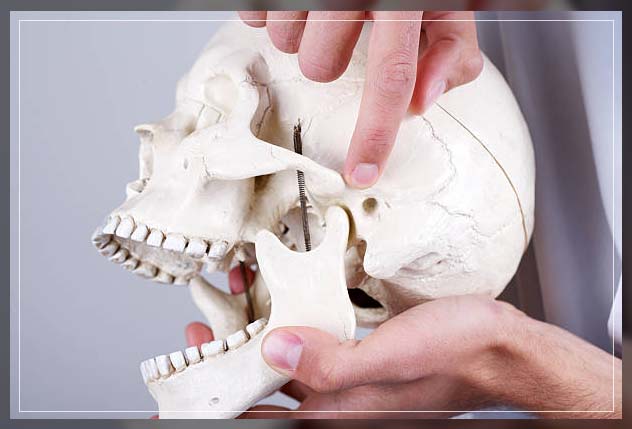 Most of the causes of pain are due to an injury or abnormality to the joint of your jaw. But there could be other possible causes as well. Here are some of the reasons for this kind of pain:
1. Temporomandibular joint and muscle disorder (TMD)
The problem is commonly referred to as TMDs. Today, it is one the most common causes of pain, affecting more than 10 million Americans alone. Commonly known as TMJ or Temporomandibular joint – it allows your mouth to open and close.
 The temporomandibular disorder or TMD only arises when the joints malfunction, creating symptoms such as pain and swelling on your face on the left and right sides. The TMJ is the hinge joint located on each side of your jaw. The TMJ pain or TMJ disorder should be addressed at the earliest.
There can be several factors that may cause TMD. It is also possible to experience TMD due to several causes – all at the same time. Some of the common causes of TMD could include:
- Muscles that control jaw movement might cause pain.
- Injury to the jaw joint.
- When there is excess stimulation to your jaw joint.
- A displaced disc that might help cushion the movements of the jaw.
- Arthritis of the protective disc, which is located at the jaw joint.
The most common symptom and indication of TMJ disorder include jaw tenderness. You will feel a toothache, headache, or even an earache. The pain might worsen when chewing, and you might hear or feel a popping noise when eating.
 In such a scenario, you might also experience a decreased jaw range of motion. Moreover, this condition might be associated with neck pain, stiffness, and shoulder pain that radiates down your arm.
2. Teeth Grinding (Bruxism)
Bruxism or teeth grinding issues might result in pain since many people do this while sleeping. At times one may not realize that you are grinding your teeth.
Symptoms of bruxism often include jaw, face, and neck pain, headaches, and dental problems. It may also lead to worn-down and fractured teeth.
 Besides teeth grinding, other muscle overuse conditions often include – excessive gum chewing and teeth clenching. All these conditions might cause jaw pain.
3. Jaw Pain Due to Toothaches
It is important to note that multiple dental problems could be linked with this pain. For instance, a cracked or broken tooth may cause dull, intermittent, or sharp pain triggered when you eat or bite.
A tooth cavity might also cause constant pain that may worsen by hot or cold food. Dental problems like dry sockets and tooth abscesses may also lead to pain. A dental abscess or a severe tooth infection may cause severe pain that radiates to your jaw.
4. Infection or Sinus Infection
An infection around the head and neck area, specifically a sinus or ear infection, might also be the cause. Other sinusitis symptoms include fever, headache, toothache, nasal congestion, and cheek pain.
 The sinuses are air-filled cavities located close to the jaw joint. When the sinuses become infected with a germ, like a virus or a bacterium, it could result in excess mucus. The excess mucus in the mouth area puts pressure on your jaw joint, which causes severe pain.
Likewise, besides severe pain – a few other symptoms of an ear infection may include nausea, difficulty hearing, vertigo, and, occasionally, ear drainage.
5. Trauma
Injuries to the face or jaw, including a dislocated or broken jaw, could cause significant pain.
Some Rare Causes of Jaw Pain
While most cases of jaw pain are often linked to a TMJ problem, dental issues or infections are other causes that your dentist needs to consider.
1. Heart Attack
Jaw pain may signal a heart attack – a life-threatening condition requiring immediate medical attention. One may feel a crushing or heavy feeling in the center or left side of the chest that might move upwards to the jaw or neck area. In such a scenario – it could indicate a heart attack.
Other heart attack symptoms often include difficulty breathing, sweating, dizziness, nausea, vomiting, and weakness. You should call the emergency number when you have a heart attack.
2. Trigeminal Neuralgia
It is a severely painful condition affecting the trigeminal nerve. This sensitive nerve will help you detect facial sensations and move your jaw.
This condition may lead to one-sided attacks. You may experience a sharp, electric-shock-like pain especially in the eyes, nose, lips, jaw, forehead, and scalp. The pain is usually triggered when you talk, eat, or expose your face to cold air.
3. Autoimmune Conditions
The conditions might include Sjögren’s syndrome, rheumatoid arthritis, and systemic lupus erythematosus may also cause jaw pain. They are specific symptoms quite similar to those of TMJ disorder.
4. Osteonecrosis of the Jaw
The condition may occur when the blood supply to your bone is disrupted. Meaning the bone starts to die. It could cause severe pain. It is important to note that excessive alcohol consumption can lead to osteonecrosis. Other conditions may also result in this condition where the patient experiences severe jaw pain.
5. Cancer
Certain types of cancer, especially oral cancer, often results in severe pain in the face and jaw. With oral cancer, you may notice other symptoms too, such as a sore in the mouth that would ont heal. You may also notice persistent pain in the mouth, trouble chewing your food or moving the jaw. Other symptoms include loosening of the teeth, swelling of the jaw, and at times a lump or mass in the neck area.
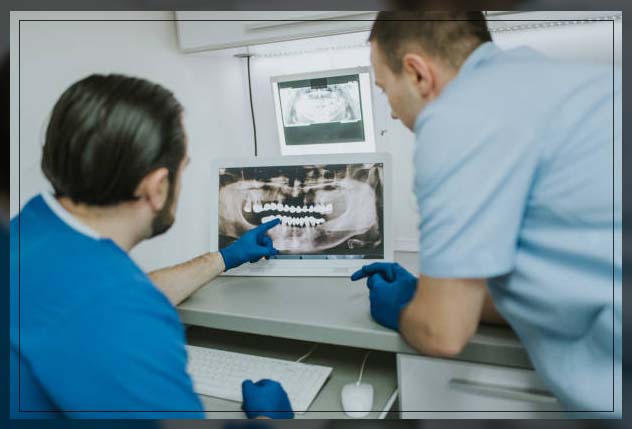
It may surprise you that the above list of pain causes is not exhaustive. In simple terms, you need to seek out for a proper diagnosis from your dentist. Your dentist may take dental X-rays of your jaws to capture images of the interior of your mouth.
The majority of pain in your jaw is rarely related to medical emergencies, but if your discomfort is severe and prolonged, it may have serious consequences. If your pain is linked to signs and symptoms like chest pain, sweating, trouble breathing, or dizziness, – be sure to seek immediate medical attention.
Medical Treatment for Jaw Pain
Your dentist would first recommend non-invasive treatment methods to diminish your pain. If you still have persistent pain in the jaw after these methods, you should talk to your dentist. You might need further interventions to find relief.
Mouth guard: A mouth guard as you know is simply a plastic dental protector. You need to wear it on your upper or lower teeth. The design is such that it is custom-fitted for your mouth. You can purchase one at the pharmacy, but your dentist would prefer to make one that fits better and lasts longer. If you wear the mouth guard at bedtime, it could help stop you from unconsciously grinding your teeth.
Muscle relaxers: In case your pain does not respond to the mouth guard, your dentist may prescribe muscle relaxers to relieve your jaw tension. However, this solution may not always help people with TMD.
Botox injections: Apart from the above, other invasive treatment methods include Botox cosmetic injections. When your doctor injects it into your jaw muscles, the botulinum toxin in Botox might keep the jaw muscles from clenching. The condition might help to relieve pain due to TMD. These injections often last for months, and you may require re-injection in the future.
Jaw surgery: In rare instances, your dentist will recommend jaw surgery to correct TMD problems. This treatment is usually reserved for patients with severe pain caused due to structural issues in the jaw joint.
Summary
You should note that getting to the bottom of your jaw pain may require a little patience and persistence on your end. Especially when you find you are visiting your dentist and doctor too often. Be assured that once the source is identified and diagnosed, most individuals can obtain relief and treatment.
As you can notice, pain in your face, jaw, cheekbones, or chin could have many causes. Your healthcare professional or dentist can treat all these issues successfully, but they must be diagnosed quickly.
In order to determine the exact source of your pain, you should schedule an appointment with your dentist. A thorough examination by your dentist would help to identify the precise cause of the problem and, at the same time, the treatment plan.
Muscle Strain: Causes, Symptoms, and Treatment
A muscle strain is an injury to the muscle or tendon.
These are the fibrous tissues that connect your muscles to the bones.
It is important to note that minor injuries can only overstretch a muscle or tendon.
While more severe injuries may involve partial or complete tears in such tissues.
In some cases, also called pulled muscles, strains commonly occur in your lower back and in the muscles at the back of your thigh or hamstrings.
However, the difference between a strain and a sprain is that strain involves an injury to the muscle or to the band of the tissue that attaches muscles to a bone.
While a sprain injures the bands of the tissue that connects two bones together.
With the help of initial treatment, which includes ice, compression, and elevation, you can treat it.
For mild strains, you can treat them successfully at home.
In some cases, however, for severe strains, you will need surgical repair.
Keep on reading.
Muscle Strain
A muscle strain or pulled muscles takes place when your muscle is overstretched or torn.
This often occurs as a result of factors like:
- fatigue
- overuse
- improper use of a muscle
Moreover, strains can occur in any muscle, however, they most commonly occur in your lower back, neck, shoulder, and hamstring.
Hamstrings are the muscles behind your thigh.
These strains can cause pain and can also limit the movement within the affected muscle group.
Mild to moderate strains, however, can be successfully treated at home with ice, heat, and anti-inflammatory medications.
While for severe strains or tears, you may need to have medical treatment.
Symptoms of Muscle Strain
You will feel a muscle strain as it occurs, and the symptoms are:
- sudden onset of pain
- soreness
- limited range of motion
- bruising or discoloration
- swelling
- a ‘knotted-up’ feeling
- muscle spasms
- stiffness
- weakness
In case you have a mild strain, a torn muscle may feel slightly stiff.
However, it will still be flexible enough for use.
On the other hand, a severe muscle strain is when a muscle is severely torn.
This often results in pain and very limited movement.
Moreover, the symptoms of mild to moderate muscle strains often go away within a few weeks.
While more severe strains can take months to heal.
Causes of Muscle Strain
An acute muscle strain takes place when your muscle tears suddenly and unexpectedly.
Such tears can occur either from an injury or trauma.
This can occur due to:
- not warming up properly before a physical activity
- poor flexibility
- poor conditioning
- overexertion and fatigue
There is a misconception that only rigorous exercises and workouts of high-intensity cause muscle strains.
 According to Johns Hopkins Medicine, muscle strain can even occur from walking.
An acute strain can happen when you slip or lose your footing, jump, run, throw something, lift something heavy, or lift something while you are in an awkward position.
Moreover, acute muscle strains are more common in cold weather.
This is because muscles are stiffer in lower temperatures.
It is important to make sure you take extra time to warm up in such conditions to prevent strains.
On the other hand, chronic muscle strain can be a result of repetitive movement.
This can be due to:
- sports like rowing, tennis, golf, or baseball
- poor posture
- hold your back or neck in an awkward position for long periods of time like when you are working at a desk
First Aid Treatment
In most cases, you can successfully treat muscle strains at home.
According to Mayo Clinic, minor muscle stress can be treated with rest, ice, compression, and elevation, RICE.
Let’s discuss them as follows:
Rest
Make sure to avoid using your muscle for a few days, especially if movement causes an increase in pain.
However, too much rest can cause problems to become weak.
This can also prolong the healing process.
After two days, slowly begin using the affected muscle group.
Moreover, make sure to avoid overdoing it.
Ice
Applying ice immediately after an injury to the muscle can help.
This will help to minimize swelling.
 Do not put ice directly on your skin. Use an ice pack or warp ice in a towel.
Keep the ice on your muscles for about 20 minutes at least.
Repeat every hour on the first day, and for the next several days, apply ice every four hours.
Compression
In order to reduce swelling, wrap the affected area with an elastic bandage until the swelling comes down.
However, be careful not to warp the area too tightly as doing so can reduce blood circulation.
Elevation
Whenever possible, make sure to keep the injured muscle raised above the level of your heart.
Other Methods
Some other self-care methods include the following:
Using over-the-counter anti-inflammatory medications, like iburophen, or Advil.
This will help you to keep the pain and swelling down.
While acetaminophen, Tylenol can also help to reduce pain.
Apply heat to your muscle a number of times a day, for 3 days.
You can do this as it will help bring blood circulation to the area of healing.
Do not Rest your muscles for too long.
Resting for too long can cause stiffness and weakness.
Moreover, beginning in light stretching as soon as possible, while slowly releasing the level of activity.
Make sure to Stretch and Warm Up before Exercising.
When returning to normal activities, warm up or stretch.
 It will help you to increase blood flow to your muscles and decrease your risk of injury.
Stay in Shape
You can make an effort to stay in shape. You are less likely to develop a strain if your muscles are strong and healthy.
However, in case your muscle strain is severe, you will need to seek medical advice or medical attention.
Your doctor may also recommend physical therapy.
When to see a Doctor?
For mild to moderate strain, home treatment should be enough.
Make sure to seek medical attention in case of the following:
- pain does not subside after a week
- numbness in the injured area
- there is blood coming from the injury
- you are unable to walk
- you cannot move your arms or legs
With the help of physical examination and imaging tests like X-rays and MRI scans, your doctor can help to determine the extent of the injury.
Moreover, with the help of treatment that includes anti-inflammatory medications, and pain relievers, you can take steps to reduce pain and swelling.
Furthermore, your doctor may also prescribe physical therapy to help strengthen your muscles and restore movement.
In case of severe cases, you may need surgery to repair the muscle.
Prevention Tips
It is important to note that you can reduce the chances of straining your muscles if you take some basic precautions.
These are:
Try not to Sit in one position for Too Long
It is important that you take frequent breaks to move and change your position.
You can use a chair that provides good support for your lower back or use a pillow for support.
Moreover, try to keep your knees level with your hips.
Maintain Good Posture when Standing or Sitting
In case you spend a long time in one position, make sure to try to alternate one foot and then the other on a low footstool.
This will help to decrease stress on your back muscles.
 Lift Objects Carefully
Keep your back straight, bend at your knees, and always lift with your legs.
Hold the weight close to the body and do not lift and twist at the same time.
Take Precautions to prevent Falls
You should be careful to prevent falls, like holding handrails on stairways, avoiding slippery surfaces, and keep on the floors uncluttered.
Lose Weight
In case you are overweight, take steps to lose those extra kilos.
Wear Shoes that Fit Properly
Make sure to wear shoes that fit properly, so that your feet do not slip.
With the help of regular exercise, you can keep your muscles healthy and strong.
However, proper techniques are also important to prevent muscle strains.
Always stretch and warm up before engaging in any physical activity.
In the same way, take time to stretch after each workout or session of physical activity to prevent muscle stiffness.
If you are new to exercising, start slowly, and build up your activity a little at a time.
Furthermore, it is vital to understand the limitation of your body.
If something does not feel right during an activity, stop immediately.
Outlook
Recovery time from muscle strain depends on the severity of the injury. For a mild strain, you will be able to return to normal activities within three to six weeks with basic home care. However, for severe strain, recovery can take a number of months. In severe cases, surgical repair and physical therapy may be necessary.
With the help of proper treatment, you can recover completely. You can improve your chances of recovery by taking steps to avoid getting the same injury again. Moreover, follow the instructions of your doctor, and do not engage in strenuous physical activity until your muscles heal completely.
Shivering in Fever: Causes and Remedies
Shivering in fever basically relates to how when you are feeling extremely cold, your body gets chills.
Shivering usually relates to having a bad cold. You may think this is because of the fever.
But usually it is the body’s own response as to when they are having an illness and cannot combat it successfully.
Also its like a natural mechanism. This means your body’s temperature will be rising. And this helps in fighting off the bacterial infection.
But you should be knowing just how hot you are getting. And when it is getting far off from being the normal temperature.
In this article I am going to be sharing all that you need to know about what shivering means. Why it happens, its impact and how to control it.
So let’s begin:
Why Am I Shivering?
Shivering in its simplest sense means your body is trying to warm itself up.
So what is really happening here?
When you are shivering what is happening is that your muscles will be contracting and relaxing.
This is also done at such a rapid speed and these movements will be creating heat.
There is involuntary response which will be triggering in the immune system.
What happens is that there will be an increase in the body temperature. And that helps the body to fight off the infections . As these infections will not survive the very high temperatures.
Fever without Shivering
It is important to identify that there may be fever without shivering also.
This means you are feeling ill without having the chills.
There are certain conditions which can lead to you feeling such physical weakness.
They include:
- heat exhaustion
- medications may put that kind of effect on you
- this includes antibiotics as well as blood pressure lowering drugs
- inflammatory conditions can also play a part in this
- there are also certain immunizations which can lead to this
Why Shivering in Fever Happens?
It is important to now realize and determine as to why this can even happen.
Firstly a person who is having fever may be having muscle contractions.
This causes for your body to be shaking and shivering.
And with that the purpose of the same makes your body temperature rise.
This helps a person to fight off the infection in an effective manner.
Remember that the hypothalamus is at the base of the brain.
This is actually a small area which is going to be regulating the temperature.
So it actually sets what we call a healthy point. When it does, there is an optimal level which works in regulating the person’s temperature.
This is around 37degrees.
And when the body temperature is going to be deviating from this, the body will be trying to return to the optimum temperature.
This is important and that is what is causing for the sweating to happen so that the temperature can lower.
Identifying the Causes
There can be a range of causes as to why someone is shivering.
Usually people assume it is because of a common cold.
But there can be other underlying reasons for this too.
In this article I want to share some of the leading causes as to why someone may be be shivering.
Fever
You need to monitor your temperature.
If you are just feeling cold that is not the problem. Having a very strong fever is worrisome and suggests that you are having a strong fever.
What doctors suggest is that having a body temperature which is higher than 100F is anything that can suggest that you are having a fever.
Psychogenic Disorders
This is what we consider as someone who is having stress of any kind.
Mental health factors can play an important role in this too.
It relates to having very strong psychogenic movement disorders.
This will be affecting the movements too.
A doctor who is specializing in medical conditions will have to look at the ways in which your health is getting affected.
- Some of the major movements relating to it including movements which are happening quite suddenly.
- the memories you have which are going to lead to the triggering of the trauma
- the movements which stop when a person will be getting distracted
- sometimes certain underlying conditions can also serve as a major source of depression
Sometimes you will notice that the shivering is the body’s own response to stress.
Postanesthetic Shivering
Shivering is also a common feeling that happens when a person is regaining consciousness after they come out of general anesthesia.
The temperature of the person may be dropping during the surgical procedure.
And this leads them to shiver when they are waking from an operation.
Remember that the anesthetics can also lead to the body’s ability to actually regulate the temperature.
That will require for you to make sure you are using plenty of blankets and heaters to control the temperature levels.
Sometimes its Just Excitement!
You will notice how strong emotions also cause you to shake or shiver.
There is a major surge in the adrenaline which will create a fight or flight response in the body.
Shivering is going to subdue when the adrenaline will leave the body.
Usually this happens rarely.
And you will see how excitement or a frightening moment is going to impact your health even more.
The Role of Anxiety
Anxiety is also one of the major causes of how mental condition can affect your body.
This will also lead to your mind having a major impact.
Some of the physical symptoms include having nausea, there is also an increase in the heart rate and you cannot control shivering or shaking.
But there are several things you can do for controlling the anxiety.
This includes therapy, medication as well as adapting lifestyle changes.
You just have to make sure that you are taking on several activities including music, exercising as well as spending time with friends and family.
Treating Shivering in Fever
There are so many ways in which you can control the effects of shivering in the body.
If it occurs because of fever, having low blood sugar levels can control which leads to your health getting better.
You should look into sitting down in a quiet corner. And breathing slowly.
As that will be calming the nerves and also control the strong emotions.
Some other causes can be due to certain medical conditions you may be having.
Takeaway
Shivering is one of the most common effects of the human body.
It can happen due to several reasons.
You will be knowing of why it is happening because the kind of impact it can make on your body.
There can be many causes for it which makes it a major condition you need to know of.
Many will suffer from an increase in the heart rate. And makes your breathing even faster.
Some people may suffer from heart conditions as well. They will lead to even more complexities if not handled in a proper manner.
13 Common Dental Questions to Ask Your Dentist
On your first visit to the dentist make sure to ask some common dental questions.
Getting answers to these questions will help you understand how to approach your oral health and get help when you need it.
Wondering what questions you should be asking? This article is here to help!
Keep reading below to know what question you should be approaching your dentist with so that you can maintain your oral health properly.
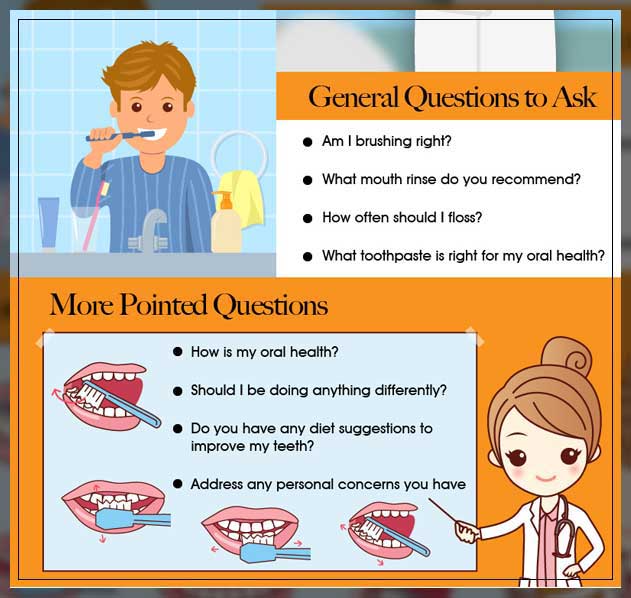
How Can I Practice Oral Hygiene at Home?
If you’ve been to the dentist first time in your life after living several years, there is a chance your teeth are not in their best condition.
If you regularly visit a dentist for scaling and teeth cleaning then your teeth will be in good condition while you are maintaining oral hygiene. This means that there will be fewer teeth with decay and cavities and you can also maintain their good condition at home.
It is absolutely necessary that you brush your teeth twice a day and floss between your teeth at least once.
These will keep your teeth healthy after getting scaling and cleaning done.
Plus, they prevent the accumulation of bacteria and the onset of other oral health diseases.
Besides, your doctor will encourage you to add a few other oral hygiene products to your routine.
These include:
- brushing with fluoride toothpaste to prevent tooth sensitivity and strengthen the enamel
- use an interdental brush or a water flosser occasionally
- snack smarter, do not go for sugary treats often
- drink lots of water
- avoid tobacco products such as chewing tobacco and cigarette
- eat more fruits and vegetables that are healthy for oral and overall health
Now that you have asked one of the most common dental questions, let’s find out what other ones you can ask for specific problems.
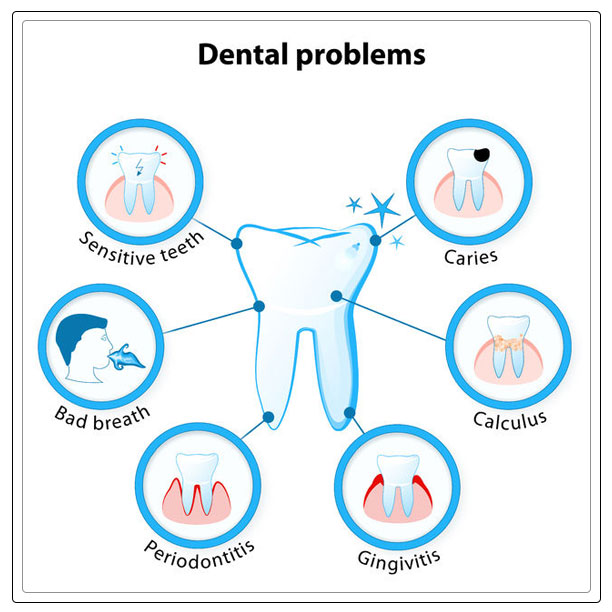
Common Dental Questions for Oral Health Problems
Why is my mouth usually dry?
A dry mouth is often a side effect of medications for blood pressure and heart.
Thus, it is more likely to occur in people who are older.
It happens when your salivary gland does not produce enough saliva to keep the mouth lubricated.
Hence, it dries down giving way to bacteria to invade your teeth.
This can cause dental problems such as tooth decay. Therefore, if you have dry mouth, discuss that with your doctor and probably look into alternatives.
Your dentist will recommend you to take care of your oral hygiene if you suffer from a dry mouth and keep the saliva flowing by chewing gum and drinking water.
Why are my teeth sensitive and how to treat sensitivity?
Do your teeth suddenly hurt while eating or drinking something sweet, spicy, cold or hot?
Odds are that is because your teeth are already sensitive. Sensitivity emerges from the enamel weakening.
The culprits are acidity and extreme temperatures that thin out the enamel leaving your teeth in pain whenever you eat or drink something hot and cold.
It can also result from teeth grinding, teeth whitening, receding gums, fillings and chipped teeth.
For that, your doctor may recommend you use fluoride toothpaste to fight sensitivity. While also treating what’s causing it such as decay and teeth grinding.
What signs indicate a dental problem?
Look out for these signs of serious dental trouble:
- Jaw pain
- Dry Mouth
- Broken teeth
- Bad breath
- Bad taste in the mouth
- Tooth Sensitivity
- Mouth sores
- Bleeding gums
- Swollen gums
- Redness
Go to your doctor before it is late and get checked to prevent the spread of infection or disease.
The later you get checked, the bigger the problem gets.
Let’s move on to other questions.

Common Dental Questions Regarding Checkups
How many times should I get a Professional Cleaning?
Set a visit to your dental clinic after every 6 months.
During your visit, your dentist will proceed to give you a standard professional tooth cleaning, provided there are no other problems.
For instance, people suffering from gum disease or tooth decay will have to go to the clinic after every 3 months rather than 6 months.
This way, your dentist will be able to track your progress and also check-in time.
Going every 6 months will keep your teeth clean as well and prevent any future oral health problems.
If any has started, your dentist can begin treating it right away.
Will I need a Dental X-ray?
While your dentist will carry out an oral examination, they will also take a full set of X-rays once or if your condition requires, during each appointment.
This helps them to gather the changes that are occurring between appointments. For example, if you are getting braces, there will be a significant change in your teeth alignment as the treatment proceeds.
X-rays help dentists to monitor it more accurately.
You will get bitewing X-rays each year whereas a full mouth can be done every 4 to 5 years.
That again depends on the condition. If you are suffering from cavities, your dentist may recommend taking one after 6 months.
When Should My Child Get a Dental Checkup?
Little ones are eligible to visit the dentist by the time it has been six months since their first tooth erupted.
This is usually around their first birthday.
Visiting the dentist this early can guide parents about how to keep their child’s oral health in good condition.
It can also ensure that their permanent teeth erupt in place and that the dentist detects any problems before they get out of hands.

Getting Treatments
How Should I Whiten My Teeth?
The best way to get teeth whitening is to go to a dental clinic.
While you may come across several remedies, not all are beneficial in whitening.
In fact, some can even worsen the state of your enamel and teeth color.
Your doctor can recommend you some over-the-counter kits or can make take-home kits that fit the structure of your teeth.
This will help in the teeth whitening gel reaching all of your teeth accurately.
However, if you want long-lasting results then get professional teeth whitening from your dentist.
Asking this question will also help in identifying if any of the home remedies are detrimental to your oral health.
How to Fix Teeth?
Depending on the issue, you can fix alignment problems with braces and Invisalign whereas you can fix defects with crowns and veneers.
A crown can cover the entire tooth that has the problem.
It looks like a real tooth by building on the root and tooth base to cement to it.
Moreover, veneers can attach a whiter material i.e. porcelain or resin on the surface of your teeth.
This improves any imperfections and gives your smile a natural look.
When Should I Get Dental Implants?
Do you have missing or weak teeth?
In that case, your dentist may recommend you get dental implants rather than dentures or tooth extraction.
Usually, older patients get implants because they can prevent similar problems in other teeth.
How to Prevent Gum Disease?
Gum disease is very common, Hence, asking your doctor about it is necessary.
They can guide about the difference between healthy and unhealthy gums.
Also, they can point out symptoms and your risk of getting it.
Prevention is always better so you can identify when to get treatment.

Useful Common Dental Questions
What kind of Toothpaste or Toothbrush should I go for?
The kind of toothpaste you use depends on your needs. For instance, many will give you a fresher breath however, there are specific ones for sensitivity and whitening.
For tooth sensitivity issues you may want to check out toothpaste with fluoride. Similarly for whitening, those containing baking soda and other abrasives may slightly help.
Regarding toothbrushes, choosing one with soft bristles is absolutely necessary. Hard-bristled brushes are harsher on your teeth, hence, you should only use those with a soft bristle.
When Do Baby Teeth Erupt and Fall off?
If this is your first child and their very first visit to the dentist, it is important to know when their baby teeth will start to erupt and fall off.
The good news is you don’t have to worry about their teeth falling off till they are six years old. However, baby teeth eruptions will keep happening by they are 2 years old.
Therefore, you should be aware of how to take care of your little one’s teeth so that they do not get dental caries.
Finally,
There are plenty of common dental questions that you can ask your dentist.
Besides this, ask about:
- any of the symptoms you are feeling and seeing such as pain or discoloration
- what kind of food and drinks are bad for your teeth
- what you should be eating instead
- will a mouthwash help in oral hygiene
- is flossing and using fluoride necessary
- why do you need dental exam
Asking these questions and getting answers will build trust in the patient-doctor relationship.
Moreover, you will be more informed about your oral health to take good care of it.
Hence, whenever, you have your next appointment don’t forget to ask these common dental questions.
Green Vegetables Good For Your Teeth and Gums
Like many other rules you might have learned in childhood, “eat your vegetables” – is a real eye-roller for every child. However, one only realizes when you grow up – those green vegetables can give you health and energy.
What else do green vegetables give you? A better smile. Yes. In addition to their ability to make you healthy, most green vegetables offer real dental benefits. We all know that – prevention is the best medicine for your smile, dental health, and overall health.
Did you know that the food you eat every day plays a big role in your life. Moreover, the foods you select, when you eat your meal, and how often you eat them – affect your dental health.

Everyone knows that green vegetables are a must in any healthy diet. Surprisingly, according to the Centers for Disease Control and Prevention or CDC report – only 1 in every 10 adults get enough fruit or green vegetables. And hence many of you are missing out on the essential vitamins, minerals, and fiber that these greens provide.
Do you know that even tooth decay at any time is preventable with regular dental visits, good dental hygiene, and a healthy diet?
Here we explain why and which green vegetables are the most must-have for your smile.
Fresh and Green Vegetables Keep Your Teeth Healthy
Fresh fruits and vegetables – are the best foods for your teeth. Primarily because of their nutritional and mouth health benefits.
 For example, crisp raw vegetables and fruits like celery, apples, and carrots – can surely help freshen your breath and clean plaque on your teeth as well.
Note that most fruits and vegetables contain loads of antioxidant vitamins, similar to vitamin C, that will help protect your gums and prevent gum disease. Especially the antioxidants present in green vegetables avoid cell damage and help other tissues from bacterial infection.
Leafy salad greens are loaded with folic acids, which promote a healthy mouth. Folic acid is a member of the B vitamin family and is known to support cell growth all over the body.
 Try shopping for fresh fruits and green veggies from your local farmers market or grocery store for healthy teeth and gums. Fresh fruits and veggies are not only richer in vitamins and nutrients, but they are also healthy for your body.
Do you know that every 9 out of every 10 people experience tooth decay or cavities? Hence even today, tooth decay remains the most common chronic childhood disease. People who lack access to affordable dental care and green food often have significantly higher rates of oral disease.
Green Vegetables Pack Nutrients for Enamel
Scientists and researchers are in the process of studying the amazing pro-health qualities of fruits and veggies. You should remember that leafy green and dark, multi-colored vegetables such as spinach, lettuce, cabbage, kale, chard, asparagus, and other leafy greens are packed with a variety of vitamins and minerals. All these nutrients are essential for your body to maintain and improve your oral health.
 Nutrients and vitamins in these dark leafy vegetables include beta carotene, vitamin A, vitamin C, phosphorus, calcium, and magnesium. Phosphorus in your food is stored in your bones and teeth helping, your body balance and absorb calcium and magnesium.
If you eat the right green vegetables, it will give you:
Antioxidants
Antioxidants can promote the healing of your oral wounds. They may also protect against harmful free radicals.
Anthocyanins
These are powerful phytochemicals. They can keep away pathogens from colonizing your gum tissue and teeth.
Magnesium
This mineral prevents tooth cavities, strengthens your teeth, and even builds enamel.
Calcium
Calcium, as you know is very helpful and can build tooth enamel.
Vitamin A
Together with beta carotene, Vitamin A can protect your mucosal barriers and also against allergies. Vitamin A has a positive impact on nasal breathing and upper teeth development.
 Note that Vitamin A is also a key nutrient for your gums’ health and your enamel. The enamel of your teeth has keratin, a protein that uses vitamin A during the formation process.
Vitamin C
Vitamin C is helpful in protecting your gums from cell damage and infection. It may also reduce gum bleeding.
Vitamin E
The vitamin can reduce inflammation in your mouth.
Vitamin K
Vitamin K will promote blood clotting, finally reducing bleeding, especially after flossing, brushing, and dental procedures.
Phosphorus
Phosphorus can naturally protect and rebuild your tooth enamel. The mineral is a must-have for your healthy teeth. The mineral helps your body absorb and use calcium effectively. The chemical also helps strengthen your teeth by protecting and rebuilding the enamel.
Folic acid
Folic acid has numerous benefits. Folates promote whole-mouth and whole-body health. Folic acid may protect against all kinds of gum disease, especially in pregnant women.
The acid can effectively reduce gum inflammation as well. Folate also makes your teeth and gums more strong against anaerobic bacteria and dental plaque.
 Bacteria and plaque are the two culprits responsible for all the havoc like decay, bad breath, and gum disease. The folate may also help to reduce gum bleeding – one of the initial signs of gum disease.
Xylitol
Xylitol is effective in neutralizing your mouth’s pH level. It prevents harmful bacteria from sticking to your teeth’ surface. The presence of xylitol in your mouth -it will inhibit the growth of the cavity-causing bacteria in your oral cavity. Probabaly because these bacteria cannot utilize xylitol to grow.
If you use xylitol continuously, the quantity of the bacteria will keep changing. You will notice very few decay-causing bacteria surviving on the tooth surfaces.
Raw Green Vegetables: Nature’s Toothbrush
Most the green, fresh vegetables are high in fiber and packs numerous benefit:
- These greens’ fibrous texture can heal by brushing food residue off your teeth.
- High-fiber vegetables increase salivation. Salivation can significantly decrease the acidity in your mouth? In addition, it can act as a natural rinse for most stubborn food particles on your gums and teeth.
- Eating fibrous food instantly massages your gum tissues. The process will help fight cavities and further increase salivation.
It is important to know that green vegetables can not take the place of your toothbrush. But they can work as a powerful complement to your daily oral health routine.
 As a result, experts recommend eating raw foods or salads especially at the end of each meal. This practice will help “brush away” the foods that came before them.
It is important to note that not all green vegetables offer these benefits. Here we take a look at some of the best bets.
List of Best Green Vegetables for Your Teeth
Are you looking for some good greens for your grin? You should Get the most out of your daily meal by adding these to your plate:
Celery – Celery might not be tasty, but it is fiber in a stick, a super food.
 You should remember that all the tooth brushing benefits are present in this crunchy celery.
Spinach – The green spinach leaves are loaded with nutrients like folic acid, calcium, Vitamin A, Vitamin C, Vitamin K, copper, iron, potassium, manganese, phosphorus, protein, and many others.
Kale – Kale has several essential dental health benefits quite similar to spinach and promotes oral health. But kale has the bonus of being hip and trendy. You cannot eat the raw leaves in a salad. So you should cook it. So first find some interesting, healthy recipes online.
Cabbage – High in Vitamins K and C, this all time favorite for most of you. High in fiber, cabbage has antioxidants known as glucosinolates. It can aid in disease suppression throughout the body.
Chard – Only one single cup of Swiss chard can provide you surprisingly three times the recommended daily requirement of vitamin K. So grab a packet today if you want to lower your blood pressure. It is excellent for your oral health too.
Asparagus – These green sticks may not look attractive, but they are brimming with fiber, folate, phosphorus, potassium, and vitamins A, C, E, and K.
Just half a cup of cooked asparagus can give you 57 percent of your recommended daily intake of Vitamin K. Asparagus has high micronutrient value, including zinc, iron, and riboflavin.
Carrots – These orange root vegetables packed with beta carotene and are super fibrous. Hence they are so popular and form an integral part of any diet plan you might know of.
But besides this list, there are plenty of other greens, from green tea to green apples, which can also pack an oral health punch.
A healthier mouth, a nicer smile, and better breath will keep you away from a dentist’s visit. But you should know when to make the appointment.
Green Vegetables and Good Oral Health
Good oral health is crucial as it enhances your ability to smile, speak, eat, and show emotions through facial expressions. Any preventive oral health habits like regular dental care and good oral hygiene – if developed early in life, lead to a healthy person.
Good oral health is significant. Oral health has improved over the past decades, but still a sizable number of individuals go without basic dental care. Thus leading to more excellent rates of oral diseases.
Dental decay, gum disease, oral cancer, and other oral diseases may cause significant pain and hardships for many. Access to affordable, preventive dental care may decrease disparities in oral health. Early prevention, especially in early childhood and adolescent years, is very crucial.
In such a scenario, leafy green vegetables can promote healthy oral bacteria. Their fibrous leaves keep your teeth and gums clean, stimulating saliva production. Moreover, it enriches the saliva with minerals helping to keep your tooth enamel strong.
Are you eating the recommended amount of fruits and green vegetables for your smile daily? If you get the proper nutrients and maintain your oral hygiene – you can maintain a beautiful and healthy smile that impresses others.
Vomiting Causes, Treatment, and Prevention
There are a number of vomiting causes.
Vomiting is forcefully expelling what is in your stomach through your mouth.
Moreover, it is a way of getting rid of something that is harmful to the stomach and may also be a response to irritation in your gut.
However, vomiting is not a condition but rather a symptom of other conditions.
Some of these conditions can be serious while most are not a cause for concern.
It is important to note that vomiting can be a one-time event, especially when vomiting cause is eating or drinking something that does not settle in your stomach.
But it can repeatedly be a sign of an emergency or a seriuos underlying condition.
Keep on reading to learn more about vomiting causes in adults, babies, and pregnant women, how to treat it, and when to consider it an emergency.
Primary Vomiting Cause in Adults
It is important to note that vomiting can occur of various causes in adults, babies, and pregnant women.
Let’s learn about vomiting cause in adults.
 The most common vomiting cause in adults are:
- foodborne illnesses or food poisoning
- indigestion
- bacterial or viral infections like viral gastroenteritis which is also known as a stomach bug
- medications like antibiotics, morphine, or anesthesia
- excessive alcohol consumption
- appendicitis
- acid reflux or GERD
- exposure to toxins like lead
- Crohn’s disease
Moreover, motion sickness, chemotherapy, migraine headaches, gallstones, intense pain, concussion, food allergies, and irritable bowel syndrome, IBS can lead to vomiting.
Vomiting Cause in Babies
Common causes of vomiting in babies are:
Viral gastroenteritis, swallowing milk too quickly which can occur due to the hole in the bottle teat that is too large, food allergies, or milk intolerance.
 Moreover, it can occur due to:
- other types of infections like urinary tract infections, UTIs, middle ear infections, pneumonia, or meningitis
- accidentally ingesting a poison
- congenital pyloric stenosis: a condition present at birth in which the passage from the stomach to the bowel is narrow so that the food is unable to pass through easily
- intussusception: when the bowel telescopes in on itself resulting in a blockage, which is a medical emergency
Causes in Pregnant Women and during Menstruation
Vomiting cause in pregnant women include:
Moning sickness, acid reflux, foodborne illnesses or food poisoning, and migraine headaches.
Moreover, sensitivity to certain smells or tastes and extreme morning sickness or hyperemesis gravidarum due to rising hormones can cause vomiting.
On the other hand, hormone changes during menstruation can also make you nauseous and make you throw up as a result.
Furthermore, some women can also experience migraine headaches during their periods which can also cause vomiting.
Treatment Options in Adults
Treatment for vomiting depends on the underlying cause.
Drinking plenty of water and sports drinks that contain electrolytes can help to prevent dehydration.
For adults, consider the following home remedies:
Eat small meals consisting of only light and plain foods like rice, bread, crackers, or the BRAT diet.
Sip clear liquids and rest and avoid physical activity.
The following medications can also be helpful:
Over-the-counter, OTC medications like Imodium and Pepto-Bismol can help suppress nausea and vomiting as you wait for your body to fight off the infection.
 Your doctor can prescribe Antiemetic drugs like ondansetron or Zofran, granisetron, or promethazine, depending on the vomiting cause.
OTC Antacids or other prescription medications to help treat the symptoms of acid reflux.
Anti-anxiety Medications in case your vomiting is due to an anxiety condition.
Treating Vomiting in Babies
To treat vomiting in your baby, you can:
Keep your baby lying on their stomach or side to lessen the chances of inhaling the vomit.
Make sure that your baby is consuming extra fluids like water, sugar water, and oral rehydration solutions like Pedialyte, or gelatin.
 However, if your baby is still breastfeeding, make sure to continue breastfeeding often.
Moreover, you should avoid giving them solid foods.
Make sure to see a doctor or seek medical advice if your baby refuses to eat or drink anything for more than a few hours.
When Pregnant
If you are a pregnant woman with morning sickness or hyperemesis gravidarum, you may need to receive intravenous fluids in case you are unable to keep down any fluids.
However, if you have a more severe case of hyperemesis gravidarum, you may need total parenteral nutrition that your doctor will give through an IV.
 Moreover, your doctor can prescribe antiemetics like promethazine, metoclopramide, Reglan, droperidol, and Inapsine to prevent nausea and vomiting.
You can take these medications by mouth, IV, or suppository.
When to See a Doctor?
For Adults and Babies
It is important to note that adults and babies should see a doctor if they:
- are vomiting repeatedly for more than a day
- are unable to keep down the fluids
- have signs of severe dehydration like fatigue, dry mouth, excessive thirst, sunken eyes, fast heart rate, and little or no urine
- however, in babbies, signs of severe dehydration can include crying without producing tears and drowsiness
Moreover, having green-colored vomit or vomit that contains blood, loss of significant weight since vomiting bean, or vomiting off and on for over a month, should seek medical advice.
Pregnant Women
Pregnant women should see a docotr if their nausea and vomiting make it impossible to eat or drink and keep anything in the stomach.
It is important to note that vomiting along with the following symptoms should be treated as a medical emergency:
Severe chest pain, sudden and severe headache, shortness of breath, blurred vision, sudden stomach pain, stiff neck, and high fever, blood in the vomit.
While infant younger than 3 months of age with a rectal fever of 100.4ºF (38ºC) or higher with or without vomiting should see a doctor.
Prevention and Prediction of Vomiting Cause
Predicting when you may Vomit
Before you vomit, you may begin to feel nauseous and you can describe nausea as stomach discomfort and the sensation of your stomach churning.
However, young children may not be able to recognize nausea.
But they can complain of a stomachache before they vomit.
Prevention Tips
When you are feeling nauseous, there are a few steps you can take to potentially drop yourself from actually vomiting.
 The following prevention tips can help you to prevent vomiting before it starts:
- take deep breaths
- drinking ginger tea or eating fresh or candied ginger
- take an OTC medication to stop vomiting like Pepto-Bismol
- in case you are prone to motion sickness, you can take OTC antihistamines like Dramamine
- suck on ice cubes
- in case you are prone to indigestion or acid reflux, make sure to avoid oily or spicy foods
- sit down or lie down when your head and back are propped up
Vomiting caused by certain conditions may not always be possible to prevent.
For instance, consuming enough alcohol to cause a toxic level in your bloodstream can result in vomiting as your body tries to return to a non-toxic level.
Care and Recovery after Vomiting
Make sure to drink plenty of water and other liquids to replenish lost fluids as it is important after a bout of vomiting.
Moreover, start by slowly sipping water or sucking on ice chips.
Then add in more clear liquids like sports drinks or juice.
You can also make your own rehydration solution using 1/2 teaspoon salt, 6 teaspoon sugar, and 1-liter water.
 However, you should not have a big meal after you vomit.
Make sure, to begin with, saltine crackers or plain rice or bread.
Moreover, you should also avoid the following foods that are difficult to digest:
- milk
- cheese
- caffeine
- fatty or fried food
- spicy food
After you vomit, make sure that you rinse your mouth with cool water to remove any stomach acid that can damage your teeth.
Also, make sure to avoid brushing your teeth right after vomiting as this can cause damage to the already weakened enamel.
Key Takeaways
Vomiting is a common symptom of a number of conditions. In most cases, vomiting in both adults and babies results due to an infection, i.e. gastroenteritis, indigestion, or food poisoning. However, there can be a number of other causes as well.
In the case of pregnant women, vomiting is often a sign of morning sickness.
It can be concerning if you show signs of severe dehydration or if it comes along with chest pain, sudden, and severe abdominal pain, a high fever, or a stiff neck. In case you have recently had a head injury or are vomiting blood, you should seek medical advice or see a doctor right away.
If you are experiencing vomiting, it is important to make sure to sip water and other clean fluids to prevent dehydration. Eating small meals when you are able to, consisting of plain foods like cereals, rice, and bread can help.
However, if the vomiting does not subside in a few days, make sure yo see a doctor. You can try home remedies like eating ginger, and ice chips, avoiding oily and spicy foods, sit or lay back down while propping your head and back can help.
Mercury in Fish
Let’s just all admit how much we love our seafood. There is so much variety and it is one of the healthiest options for you to take on. But some people really worry about the mercury in fish.
That means there may be some levels of toxicity in the fish.
In fact, in certain researches, it has been found that there are so many kinds of fish that do contain high levels of mercury.
This article shares more on how you can identify the kind of fish to consume. What is the impact of mercury on the food. And how you can avoid such contamination.
When you have this knowledge, it allows you to make an informed decision and take control of your health.
So let’s look onto why consuming fish is not dangerous. But you have to take on certain precautions to make it work.
Let’s begin:
Why Mercury in Fish is a Problem?

The first thing to know and talk of is what is mercury basically.
This is actually a very heavy metal that is in air as well as soil and water.
But how does it exist in fish?
Interesting story really.
It actually exists in three forms- elemental and organic as well as inorganic.
You will probably know that we are getting exposure to mercury in some way.
Even when we are breathing in mercury vapors.
And the exposure to fish happens when they are consuming low concentrations of mercury in water.
Yes, there is water pollution and because of it, the sea life is also suffering through it.
Over time what happens is that these fish will be absorbing the mercury in high content in their bodies. As this is when it takes on an organic form.
And this is when it begins to accumulate higher in people.
In some, there is the definite higher levels of mercury which you need to combat.
So it is wise to not consume such kinds of fish. Avoiding allows you to keep your health in check.
Mercury in Tuna?
While talking about mercury in fish, it is important that we analyze and speak of ways in which tuna may or may not contain mercury.
The thing is it is really nutritious. Also it serves as a major source of protein.
There are so many fatty acids and B vitamins in it.
But again, there may be high levels of mercury in it.
This is the high level of heavy metal which can cause several problems in the system.
Actually if you look into the research done on the topic- as it turns out tuna will be consisting of far higher levels of mercury than other seafood types.
This includes salmon, oysters, lobsters and even scallops.
Hence for pregnant women and those at higher risk, it is best to avoid consuming tuna altogether.
Taking such high risks will create more problems for you and this should be avoided at all costs.
So while having to consume tuna once a while is fine. The problem begins when you are eating too much.
That will lead to complications in the system too.
Knowing how to combat the same allows you to have a complete knowledge base on ways to tackle the same.
The Accumulation in Humans

Be it Dubai or any Middle Eastern country, you would know how people just love their seafood around here.
And why wouldn’t they?
It is definitely delicious and gets the taste buds all excited.
The thing is that shellfish actually is a major source of mercury.
If you continue to consume it, it will be leading to major health problems.
So it isn’t just a gossip which is spread.
The fact is mercury can very well be harmful.
How it works?
Basically there are sea plants like algae which is taking the mercury in.
This is then being eaten by the fish.
When they eat it, they will also be absorbing and retaining that same amount of mercury in their bodies.
Also when it comes to what fish, predatory fish actually consume higher levels of mercury in their bodies.
Now let’s look into the details of the negative impact.
Fish that Has Mercury
Let me now highlight and speak of the most common fish that does consist of high levels of mercury. This will include:
- Shark
- Ray
- Swordfish
- Gemfish
- Ling
- Barramundi
- Southern tuna
- Negative Effects of Mercury in Fish
However there are also those which consist of low levels of mercury. While the negative impacts are few, they do cause mood swings.
These are the fish which are consumed commonly and allows you to enjoy fish once in a while. They include:
- Salmon
- Canned Tuna
- Shellfish of different kinds- this includes prawns, lobsters and even oysters.
But this is not a complete list. It allows you to handle the whole scenario in ways which

There are definite serious health concerns that you need to look into and analyze.
In both humans and animals, you will notice how this actually leads to major brain problems,
It is important to know and analyze them so to create a complete understanding as to how it is affecting your health.
There has been some serious concerns on how it can actually lead to Alzheimer’s, Parkinson’s as well as autism and even depression and anxiety.
All of this suggests that you will have to make sure your intake of mercury is coming at controlled levels.
There are also concerns on how mercury leads to high blood pressure.
When you are not able to handle this well, it will be leading to you suffering from several ailments.
Heart attacks is also becoming common and should be addressed.
Who is At Greater Risk?

It is important that we analyze and determine as to how is more at risk when it comes to mercury in fish consumption.
The thing is it will not be not affecting every person in the same way.
So there are those group of people who should be taking extra precautions.
One of the people who should take major precautions before consuming fish are pregnant women. They are at high risk.
Also those who are breastfeeding their children and also have young children.
In such cases, it is advisable that you stay away from fish completely.
Also there are fetuses and children who will be more vulnerable to mercury toxicity.
That means it can easily be passed from a pregnant mother to a fetus through breastfeeding.
So it is best that you have a better control and management through this.
It very well also causes you to suffer from issues like having poor memory, or very poor motor functioning skills.
All of this adds up and can cause major concerns and problems.
Takeaway

When we talk of mercury in fish, there are several things to consider and be aware of.
You have to understand how it is definitely a leading way in which your health is going to be impacted.
There are several kinds of fish which actually consist of high levels of mercury.
Knowing so allows you to manage your health in better ways. And that is going to make a difference.
It all comes down to making wise choices as only you can work out what is the best way to handle the condition.
Gummy Smile Botox: Treatment and Benefits
Every smile is endearing. Though, some people can have preferences for how theirs should look like. Hence, if gums showing while laughing is not your preference, you may want to consider gummy smile botox.
The lips rest high on the gum so rather than only seeing the gingiva i.e. the little pinkish triangles that are within teeth, around 3 millimeters of upper gum tissue are visible.
People with this smile can feel conscious about them hence, becoming reluctant to smile at all.
However, you should never hide your smile, especially if there is a solution.
This article discusses how using gummy smile botox can give you a confident smile.
Let’s find out more about the treatment below.
What is a Gummy Smile?
A typical smile will expose only 2 millimeters of upper gum tissues while you smile and laugh.
The same is not true for a gummy smile which can expose around 3 millimeters of the gum tissue.
Hence, whenever you smile, it is possible for others to see a good part of your gum tissue.
This will cause your teeth to appear smaller than they are resulting in self-consciousness regarding your smile.
So what causes this in the first place?
There can be a genetic disposition.
The upper jaw can grow excessively. This means the bones in the upper jaw grow to be longer than usual. This is the vertical maxillary excess hence it exposes more gum tissue than usual.
Another family trait is how your adult teeth grow.
When permanent tooth eruption begins, the size and the shape of the teeth can impact how much your gum is exposed.
More of it exposes if the teeth are hidden and smaller.
Plus, gums may be covering more of the teeth’ surface from the moment they erupt.
This results in an altered passive eruption which can be one of the causes of a gummy smile.
There is another condition related to the teeth, dentoalveolar extrusion.
If the teeth in the front are over erupted or grow in too far in your mouth, it results in the gums growing far as well.
Besides these problems with your teeth, issues with the lips and medications can also result in this smile.
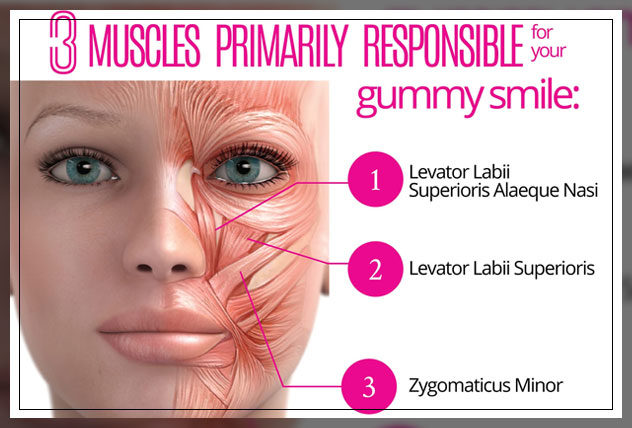
Causes
Differences in Lips
Is your upper lip on the short or hypermobile side?
A hyperactive upper lip can give the appearance that your gum is larger than usual.
Such lips can move rather dramatically when you smile.
Therefore, it exposes more gumline than usual.
Problem with the Gum
The gum tissue itself if in an enlarged and long-form can cause this appearance.
This condition is gingival hypertrophy.
Though having excess gingival tissue can also be a result of medication.
Medication
Certain medicines can cause the gum to grow too much on your around your teeth.
Gingival hyperplasia is a result of drugs that suppress the immune system, prevent seizures and also treat high blood pressure.
If you do not treat the condition, the clinical overgrowth of the gums can further lead to periodontal disease.
So in this particular case, you will have to replace your medicine with another one with a similar formula or look into treating your condition.
Other than that, you have treatments for the gummy smile ranging from surgery to botox.
While you can get the best botox treatments in Dubai for your skin, it is also beneficial for your smile.
It can hide the appearance of the gums to give your lips a more defined and fuller look to hide all the gum tissue.
Let’s find out about the benefits and process of this procedure below to know how it can hide the excess gum showing through.
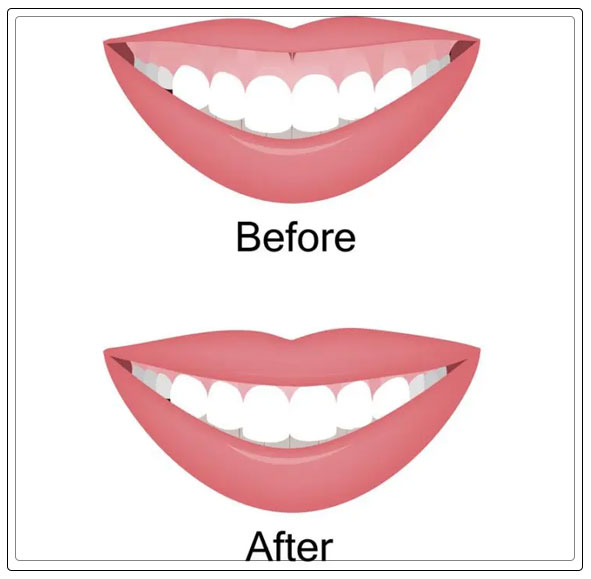
Benefits of Gummy Smile Botox
Instant Results
If you want to examine the gummy smile botox before and after then you will notice that there is a quicker result.
You can begin to see the changes in a matter of two to three days.
Not only are the results quickly, but rather they are also natural.
They are Not As Uncomfortable
Other treatment options that include surgery will not be as simple as getting botox injections.
They can pose more discomfort and require greater downtime.
However, botox hardly leads to any discomfort and there is even less with repeat care.
It is less costly
Think about the comparison of injections to surgery. Which one do you think will be more costly?
Clearly, botox injections are a much cheaper and cost-effective alternative for getting rid of your gummy smile.
Adding to that, there is less downtime and the results are quickly seen too.
This brings us to…
Immediate Recovery
No downtime means you do not have to stop all activities while the recovery period.
Since the recovery is immediate you may go about your routine as usual quickly.
That will certainly not be the case with surgery as you will have to wait till you recover and either the stitches dissolve or are removed.
You can Adjust Injections
If you want a subtle look, then you can go for fewer injections. The same goes for a drastic look, you can opt for more injections.
Hence, Botox treatment gives you the liberty to alter and adjust the injections depending on the type of results you want.
It is Less Intrusive
One reason why you will need less downtime is that botox injections are also less intrusive than surgery.
There will be no incisions or stitches hence, you do not have to wait to recover either.

Gummy Smile Botox Treatment
This non-invasive and quick gummy smile correction procedure will happen in a matter of minutes in your doctor’s clinic.
This procedure involves moving the lips too far over your gumline to cover it and treating a gummy smile.
Gummy smile treatment involves using botulinum toxin type A.
It will relax the muscles in the upper lip, limiting its rise in the upper lip to cover the gums.
The doctor injects two or more units of Botox in the area between the upper lip and nose.
The number of units can vary though one or two will be necessary to freeze the muscles.
These are the muscles that contract or elevate whenever you smile revealing your gums.
Thus, the relaxed upper lip will not contract or elevate as often.
According to a study, 99.6 percent of women who received Botox injects to paralyze the elevator muscles saw a difference in their smiles in merely 2 weeks.
While the results will be immediate, they will be fully effective in 2 weeks.
There is one downside to the procedure which can also be considered an advantage.
While the treatment is effective, it is also temporary.
Hence, the results will only last you a maximum of 3 months.
This means that if you want to maintain results then you will have to get injections again.
Though, if you keep repeating the treatment, after some time, you will have more time bracket between treatments because the results may start lasting longer.
The advantage lies in the results being temporary.
If you are not satisfied with how your lips, gums and smile look, the results will eventually not last if you don’t get the injections again. Hence, the changes remain temporary.
Though, this is one way to get a natural and appealing smile without having to go for an invasive procedure.
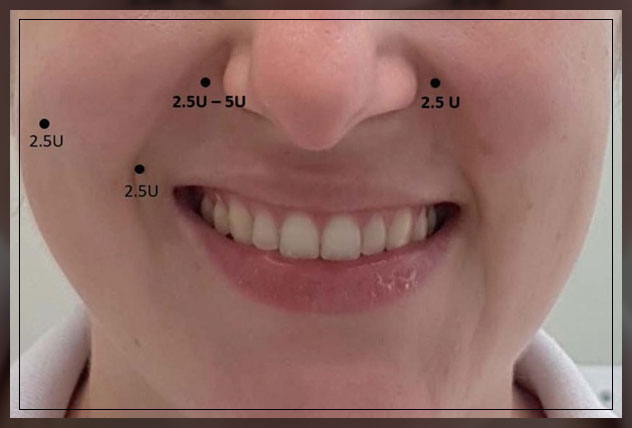
Faqs
How Long Will It Take Gummy Smile Botox To Show Results?
While you can see some improvement, the results are not exactly immediate. Give it 2 to 3 days.
The elevation of the upper lip decreases over time and you will see full results 14 days after the treatment.
Your doctor will also recommend you get follow-up treatment.
They will check the success of the treatment and determine if you need additional injections.
What is Gummy Smile Botox Price?
This procedure is more cost-effective than surgery.
However, the cost of the treatment depend son the number of units you will require to see any change.
Alongside that, the expected results, and severity of your condition will determine the cost of the procedure.
Even if the cost may be lower than surgery, you will still require treatment often after every four to six months.
Since the results are temporary, you may require another treatment, depending on the complexity of your case and that can affect the total cost.
Will It Lift The Upper Lip?
Botox treatment for gummy smile primarily lifts the upper lip.
It freezes the muscles, relaxing the upper lip in order to be visible enough to hide the gums beneath and fix a gummy smile.
The doctor will inject the botox injection above the upper lip in the orbicularis oris muscle.
As the muscles relax, the lip elevates and eventually they look well defined and voluminous.
With that, you can also see a reduction the vertical lines along the lips.
How Long Will The Results Last?
Generallly the results will not last longer than three to four months.
However, this can differ for each patient.
Getting gummy smile botox can allow you to laugh and smile wholeheartedly without being conscious of your appearance. Plus, get it anytime again.